Latest Post
Showing posts with label BACTERIA. Show all posts

Studying patterns in bacterial organization

Written By Unknown on Tuesday, February 3, 2015 | 8:03 PM

credit to Gerard Wong, of the California NanoSystems Institute

Bacterial biofilms, at first glance, may seem to be spontaneous, random phenomena from which we have no power to protect our environment or ourselves.

They’re potentially useful as an aid to wastewater treatment, but they also cause infections that account for $6 billion a year in health care costs. Biofilms are also more resistant to antibiotic drugs, making them difficult to eradicate.

Dr. Kun Zhao, of the California NanoSystems Institute at UCLA, refuses to see biofilms as arbitrary: he emphasizes the fact that biofilms are communities of bacteria in self-produced polymeric matrices of polysaccharides, and using a biophysical approach, he studies the pattern behind their organization.

Central questions in Zhao’s research include how bacterial colonies transition from reversible to irreversible attachment, how they migrate, and how they ultimately disperse. Specifically, Zhao examines the polysaccharide Psl, which poses a positive feedback loop because it is both secreted by moving bacteria and serves as a chemo-attractant for future bacteria movement. The positive feedback creates an inherent pattern, as bacteria are more likely to visit a location they have been to before.

Zhao and colleagues have also discovered that bacterial mutants that cannot produce Psl exhibit more random and uniform movement.

To better quantify bacterial movement,Zhao has created a computer algorithm that shows the full movement history of each individual bacterium on a dish, and that provides a “search engine” allowing researchers to find every bacterium performing specific life cycle activities, like division.

Zhao has postulated a “rich get richer” mechanism for biofilms. He compares bacterial organization to Wall Street because concentrated movement ensures that some cells become extremely enriched. In the future, he hopes to model colloidal structures for biological problems, like the growth of the bacterial cell wall. Zhao currently uses colloids, which in physics are used as models for atomic systems, to observe how shapes affect self-assembly. He also would like to look at cell-substrate interactions, which are implicated in bacterial territoriality and social interactions.

by Olivia Zhu

Source: Duke University

In mice, vaccine stops urinary tract infections linked to catheters

Written By Unknown on Sunday, January 18, 2015 | 3:45 AM

To adhere to catheters and start urinary tract infections, bacteria extend microscopic fibers with sticky proteins at their ends. Scientists have developed a vaccine that blocks the EbpA protein, visible as a white bulge above, and stops infections in mice. Credit: John Heuser
The most common type of hospital-associated infection may be preventable with a vaccine, new research in mice suggests.

The experimental vaccine, developed by researchers at Washington University School of Medicine in St. Louis, prevented urinary tract infections associated with catheters, the tubes used in hospitals and other care facilities to drain urine from a patient's bladder.

Each day a catheter is present in the urethra and the bladder, the risk of urinary tract infection increases. Nearly every patient who has a catheter for more than 30 days acquires a urinary tract infection. The infections make urination painful and can damage the bladder. If untreated, bacteria can cross into the bloodstream and cause sepsis, a potentially life-threatening complication.

"Catheter-associated urinary tract infections are very common," said first author Ana Lidia Flores-Mireles, PhD, a postdoctoral research associate at the School of Medicine. "Antibiotic resistance is increasing rapidly in the bacteria that cause these infections, so developing new treatments is a priority."

The study is available online Sept. 17 in Science Translational Medicine.

Manufacturers typically coat catheters with antibiotics to reduce the risk of infection. But Flores-Mireles and her colleagues in the laboratory of Scott Hultgren, PhD, showed that inserting catheters into the bladder provokes an inflammatory response that results in the catheter being covered with fibrinogen, a blood-clotting protein.

Fibrinogen shields bacteria from the antibiotics and provides bacteria with a landing pad to adhere to and food to consume as they establish an infection, the research revealed.

"The bacteria use long, thin hairs known as pili to anchor themselves to the fibrinogen, and then they can start to form biofilms, which are slimy coatings on the surface of the catheter composed of many bacteria," said co-author Michael Caparon Jr., PhD, professor of molecular microbiology. "The biofilms protect the bacteria from antibiotics and immune cells, further prevent them from being washed from the body by the flow of urine, and make it possible for bacteria to seed the lining of the bladder with infections."

The urethra and bladder of a mouse are too small to insert a full catheter into, but the scientists showed that surgically implanting a small segment of catheter into the bladder via the urethra increased vulnerability to infection in a similar fashion.

Working with Enterococcus faecalis, a common cause of catheter-associated urinary tract infections, Flores-Mireles showed that a protein on the end of the pili, EbpA, binds to fibrinogen and makes it possible for the bacteria to begin forming biofilms.
When Flores-Mireles prevented the bacteria from making EbpA, they couldn't start infections.

"This protein is like the anchor of a boat," she said. "Without the anchor, the infection is at the mercy of the waves and gets washed away."

Next, the researchers injected the mice with a vaccine containing EbpA. The vaccine caused the animal's immune systems to produce antibodies that blocked EbpA and stopped the infectious process.

The scientists are testing to see if the vaccine helps mice clear established infections of E. faecalis. They also are working to develop a monoclonal antibody that blocks EbpA to prevent catheter-associated infections in the urinary tract and elsewhere in the body.

"We took a closer look at this protein and found that one-half of it is essential for binding to fibrinogen to induce infections," Flores-Mireles said. "The segment of genetic code that makes this part of the protein is also found in the genes of many other bacteria that cause urinary tract infections, so a vaccine, antibody or drug that blocks this part of the protein may help prevent other infections linked to catheters in the urinary tract and in other parts of the body."

Smelly discovery challenges effectiveness of antimicrobial textiles

Written By Unknown on Wednesday, January 14, 2015 | 3:25 AM

University of Alberta textiles scientist Rachel McQueen has found that anti-odor clothing may not be living up to its promise. Credit: University of Alberta
Anti-odour clothing may not be living up to its promise, and an ALES researcher is saying it could all be a matter of how the product was tested.

In two separate experiments, Human Ecology researcher Rachel McQueen and her team found that some antimicrobial textiles were far more effective at performing their advertised tasks in the lab than in testing on humans. In one experiment, the fabrics were designed to help lower the risk of infection; in the second, the fabric was treated with a silver compound, which can be marketed preventing odour in clothing.

"We aren't necessarily seeing the same results in the lab about antimicrobial activity translating into antimicrobial activity when we're wearing them next to our bodies in real life," she said.

The first experiment analyzed the effectiveness of three different textiles coated in antimicrobials triclosan, a zinc pyrithione derivative and a silver chloride-titanium dioxide compound. After putting the fabric on people's arms under plastic film for 24 hours, the silver-chloride titanium dioxide compound hardly eliminated any bacteria. Overall, they found the in vivo -- tested on humans -- results were not comparable with in vitro -- tested in the lab -- results in how they prevented microorganisms from surviving in the textile.
The second test had similar results, and tested whether polyester textiles treated with bioactive concentrations of an antimicrobial silver chloride compound reduced armpit odour and bacterial populations. Although lab testing showed antimicrobial activity, the treated fabrics did not lower odour or bacterial intensity in in vivo testing.

McQueen said that anything from sweat to the proteins in the human body can disrupt the antimicrobial properties of a fabric.

"In reality, when it goes to the point that it gets put on a textile... it may not have the same level of effectiveness as the ones they studied," she said.

McQueen said these findings highlight the importance of in vivo testing, which is less common than in vitro testing, in textile product development. But, because the textiles appear to be effective at reducing bacteria in the lab, she said they may be advertised as being anti-odourous, although they may not necessarily be so when actually worn.

So, for now, McQueen suggests thinking twice before trusting textile's advertised claims.

"It's just a real spectrum to how effective they may truly be. So I'd probably say, from a consumer's point of view, if you're actually buying something that says it's antimicrobial, it may not be," she said. "I think that's important to consider in relation to a lot of claims made about textiles, that is, to be skeptical about the claims marketers make."

McQueen's research was recently published in the International Journal of Clothing Science and Technology.

Up to 80 million bacteria sealed with a kiss

Written By Unknown on Tuesday, January 6, 2015 | 1:57 AM

Couple about to kiss (stock image). As many as 80 million bacteria are transferred during a 10 second kiss, according to research published in the open access journal Microbiome.
As many as 80 million bacteria are transferred during a 10 second kiss, according to research published in the open access journal Microbiome. The study also found that partners who kiss each other at least nine times a day share similar communities of oral bacteria.

The ecosystem of more than 100 trillion microorganisms that live in our bodies -- the microbiome -- is essential for the digestion of food, synthesizing nutrients, and preventing disease. It is shaped by genetics, diet, and age, but also the individuals with whom we interact. With the mouth playing host to more than 700 varieties of bacteria, the oral microbiota also appear to be influenced by those closest to us.

Researchers from Micropia and TNO in the Netherlands studied 21 couples, asking them to fill out questionnaires on their kissing behaviour including their average intimate kiss frequency. They then took swab samples to investigate the composition of their oral microbiota on the tongue and in their saliva.

The results showed that when couples intimately kiss at relatively high frequencies their salivary microbiota become similar. On average it was found that at least nine intimate kisses per day led to couples having significantly shared salivary microbiota.

Lead author Remco Kort, from TNO's Microbiology and Systems Biology department and adviser to the Micropia museum of microbes, said: "Intimate kissing involving full tongue contact and saliva exchange appears to be a courtship behavior unique to humans and is common in over 90% of known cultures. Interestingly, the current explanations for the function of intimate kissing in humans include an important role for the microbiota present in the oral cavity, although to our knowledge, the exact effects of intimate kissing on the oral microbiota have never been studied. We wanted to find out the extent to which partners share their oral microbiota, and it turns out, the more a couple kiss, the more similar they are."

In a controlled kissing experiment to quantify the transfer of bacteria, a member of each of the couples had a probiotic drink containing specific varieties of bacteria including Lactobacillus and Bifidobacteria. After an intimate kiss, the researchers found that the quantity of probiotic bacteria in the receiver's saliva rose threefold, and calculated that in total 80 million bacteria would have been transferred during a 10 second kiss.

The study also suggests an important role for other mechanisms that select oral microbiota, resulting from a shared lifestyle, dietary and personal care habits, and this is especially the case for microbiota on the tongue. The researchers found that while tongue microbiota were more similar among partners than unrelated individuals, their similarity did not change with more frequent kissing, in contrast to the findings on the saliva microbiota.

Commenting on the kissing questionnaire results, the researchers say that an interesting but separate finding was that 74% of the men reported higher intimate kiss frequencies than the women of the same couple. This resulted in a reported average of ten kisses per day from the males, twice that of the female reported average of five per day.

To calculate the number of bacteria transferred in a kiss, the authors relied on average transfer values and a number of assumptions related to bacterial transfer, the kiss contact surface, and the value for average saliva volume.

Bacteria could be rich source for making terpenes

Written By Unknown on Friday, December 26, 2014 | 4:18 PM

Odoriferous terpene metabolites: A phylogenetic tree of terpene synthases shows the synthases (bold face or underlined) found by researchers in Japan and at Brown University using bacterial sequences. Credit: Image courtesy of Brown University
If you've ever enjoyed the scent of a pine forest or sniffed a freshly cut basil leaf, then you're familiar with terpenes. The compounds are responsible for the essential oils of plants and the resins of trees. Since the discovery of terpenes more than 150 years ago, scientists have isolated some 50,000 different terpene compounds derived from plants and fungi. Bacteria and other microorganisms are known to make terpenes too, but they've received much less study.

New research at Brown University, published in the Proceedings of the National Academy of Sciences, shows that the genetic capacity of bacteria to make terpenes is widespread. 

Using a specialized technique to sift through genomic databases for a variety of bacteria, the researchers found 262 gene sequences that likely code for terpene synthases -- enzymes that catalyze the production terpenes. The researchers then used several of those enzymes to isolate 13 previously unidentified bacterial terpenes.

The findings suggest that bacteria "represent a fertile source for discovery of new natural products," the researchers write.

David Cane, a professor of chemistry at Brown and one of the authors on the new paper, began working about 15 years ago to understand how bacteria make terpenes.

"At that time, the first genomic sequences of certain classes of bacteria were just beginning to come out," he said. "We had this idea that maybe you could find the enzymes responsible for making terpenes by looking at the sequences of the genes that were being discovered."

To do that, Cane searched through the genome data gathered for a group of bacteria called Streptomyces, looking for sequences similar those known to produce terpene synthases in plants and fungi. Eventually, he found that Streptomyces did indeed have genes encoding terpene synthases and that those enzymes could be used to make terpenes.

The verified bacterial sequences found by Cane and others enabled researchers to refine subsequent searches for additional terpene synthase genes. "Instead of using plant sequences or fungal sequences as your search query, we can now use bacterial sequences, which should yield a greater degree of similarity," he said. "So now we're fishing in the right waters with the right kind of bait, and you can find more matches."

This latest paper made use of the third generation of iterative searches and a powerful search technique developed by Haruo Ikeda of Kitasato University in Japan. Previous work had identified 140 probable sequences for terpene synthases. This latest work expanded that to 262.

The next step was to verify that these sequences did indeed code for enzymes capable of making terpenes. Testing all 262 wasn't practical, so the team chose a few they thought might give them the best chance of finding terpene compounds that hadn't previously been identified. They looked for sequences that didn't seem to fit clearly into previously known categories of terpenes.

After they had selected a few, the team made use of a genetically engineered Streptomyces bacterium as a bio-refinery to generate the terpene products.

"What Professor Ikeda did, in collaboration with us, is develop a variant of a very well-studied Streptomyces system," Cane said. "He eliminated the genes that were responsible for making most of its native products, but he left behind all of the capacity to provide the starting materials and handle the accumulation of products."

By taking some of the gene sequences they found and splicing them into their test organism, the researchers could let the organisms generate the product using the instructions from the newly introduced gene. Using this method, they were able to make 13 previously unknown terpenes, their structures verified by mass spectrometry and nuclear magnetic resonance spectroscopy.

"It's a big step forward in the area in that it provides a paradigm for how one could go about discovering many new substances," Cane said. "It's a good example of how one can use sequence analysis to identify genes of interest and then apply molecular genetic and microbiological techniques to produce the chemical substances of interest."

The work also suggests that there may be many new terpene products as yet undiscovered hiding in the genomes of bacteria.

Source: Brown University

Role of microbes, effect on infectious disease dynamics

Written By Unknown on Wednesday, December 24, 2014 | 7:24 PM

In the field, UCSB graduate student Andrea Jani uses a sterile swab to sample mucus on the skin of a frog. Frogs are released unharmed after sampling. Credit: Abby Mayer
The adult human body is made up of about 37 trillion cells. Microbes, mainly bacteria, outnumber body cells by 10 to 1. Increasingly, scientists recognize that this huge community of microbes, called the microbiome, affects the health, development and evolution of all multicellular organisms, including humans.

Studies show symbiotic microbes can help prevent infection by disease-causing pathogens. But sometimes the interaction goes the other way, with a pathogen or disease disrupting the normal community of symbiotic bacteria. In a new study, a team of scientists from UC Santa Barbara demonstrates that a fungal pathogen of amphibians does just that. The findings appear today in the Early Edition of the Proceedings of the National Academy of Science.

Landmark experiments with model organisms such as mice have shown that infectious pathogens can disrupt the "normal" microbiome, but the extent to which this process shapes symbiotic microbial communities during disease outbreaks in nature is largely unknown. This new work, conducted by Andrea Jani, a UCSB graduate student in Cherie Briggs' lab in the Department of Ecology, Evolution and Marine Biology (EEMB), addresses a fundamental gap in disease ecology and microbiome research.

Co-authors Jani and Briggs -- also affiliated with UCSB's Biomolecular Science and Engineering program -- found that the chytrid fungus Batrachochytrium dendrobatidis (Bd) appears to drive dramatic changes in symbiotic bacterial communities during natural disease episodes in four populations of the endangered Sierra Nevada yellow-legged frog (Rana sierrae). Chytridiomycosis, an emerging infectious disease of amphibian skin caused by the Bd pathogen, is a leading cause of amphibian biodiversity loss worldwide.

"In the California Sierra Nevada, this disease has led to the rapid extirpation of frogs from hundreds of high-elevation lakes; however, in other lakes, infected frogs of the same species are surviving and persisting with the fungus," explained Briggs, who is the Duncan and Suzanne Mellichamp Chair in Systems Biology. "Given that amphibian skin is the organ infected by Bd, there has been a lot of interest in how antifungal properties of some skin-associated bacteria may protect frogs against this fungal pathogen. In this study we focused on the flip side of this interaction -- that is, how infection with Bd can disrupt the skin microbial community."

"We used next-generation DNA sequencing to document significant shifts in skin-associated bacterial communities of the Sierra Nevada yellow-legged frog during natural Bd outbreaks," Jani explained. "We paired these field surveys with a laboratory infection experiment, demonstrating a causal relationship in which Bd alters the Rana sierrae microbiome."

The researchers found a remarkable consistency in the response of the microbiome to Bd infection among field populations and between the field and laboratory. Several key taxa -- a group of one or more populations of an organism or organisms -- consistently responded in the same direction to Bd infection, suggesting some predictability in the effect of Bd on the microbiome.

"What we found was that the severity of infection with Bd is strongly correlated with the composition of bacterial communities on the skin of frogs," Jani continued. "What was surprising was that across the different frog populations there was pretty striking consistency in this correlation with Bd. One of the frog populations crashed due to Bd infection; the other three populations seemed to tolerate Bd infections. So there are different disease dynamics going on, yet they have a similar relationship between the microbiome and Bd."

Still, the underlying mechanism for Bd-induced changes in the microbiome is not clear. The researchers hypothesize that the pathogen might compete directly with certain bacteria for space or resources or release compounds that negatively or positively affect certain bacterial species. Alternatively, they say, some pathogens could control immune responses of the host to favor their own growth and disrupt the normal symbiotic bacterial community.

Jani noted that some promise exists for probiotic treatments as a tool to fight the decline of frogs due to Bd, but she was careful to qualify that statement by saying that there is still a lot that scientists do not understand about either the environmental impact that might have or what the interactions are between the natural bacteria that exist on frogs and the pathogen. "We find that some taxa previously identified as having anti-Bd properties are driven to low abundances by Bd infection, which may limit their effectiveness as probiotic agents," she said.

"This study shows the importance of knowing how the many benign microbes living on and in our bodies interact with those that cause disease," said Sam Scheiner, National Science Foundation (NSF) director for the joint NSF/National Institutes of Health/United States Department of Agriculture Ecology and Evolution of Infectious Disease Program, which funded the research. "The results are important for developing responses to a disease causing amphibians to go extinct worldwide and also have implications for future studies of human health.

Source:  University of California - Santa Barbara

Microbiologists discover how gut bacterial resources are hijacked to promote intestinal, foodborne illnesses

Written By Unknown on Tuesday, December 23, 2014 | 4:02 AM

Dr. Vanessa Sperandio. Credit: Image courtesy of UT Southwestern Medical Center
UT Southwestern Medical Center microbiologists have identified key bacteria in the gut whose resources are hijacked to spread harmful foodborne E. coli infections and other intestinal illnesses.

Though many E. coli bacteria are harmless and critical to gut health, some E. coli species are harmful and can be spread through contaminated food and water, causing diarrhea and other intestinal illnesses. Among them is enterohemorrhagic E. coli or EHEC, one of the most common foodborne pathogens linked with outbreaks featured in the news, including the multistate outbreaks tied to raw sprouts and ground beef in 2014.

The UT Southwestern team discovered that EHEC uses a common gut bacterium called Bacteroides thetaiotaomicron to worsen EHEC infection. B. thetaiotaomicron is a predominant species in the gut's microbiota, which consists of tens of trillions of microorganisms used to digest food, produce vitamins, and provide a barrier against harmful microorganisms.

"EHEC has learned to how to steal scarce resources that are made by other species in the microbiota for its own survival in the gut," said lead author Dr. Meredith Curtis, Postdoctoral Researcher at UT Southwestern.

The research team found that B. thetaiotaomicron causes changes in the environment that promote EHEC infection, in part by enhancing EHEC colonization, according to the paper, appearing in the journal Cell Host Microbe.

"We usually think of our microbiota as a resistance barrier for pathogen colonization, but some crafty pathogens have learned how to capitalize on this role," said Dr. Vanessa Sperandio, Professor of Microbiology and Biochemistry at UT Southwestern and senior author.

EHEC senses changes in sugar concentrations brought about by B. thetaiotaomicron and uses this information to turn on virulence genes that help the infection colonize the gut, thwart recognition and killing by the host immune system, and obtain enough nutrients to survive. The group observed a similar pattern when mice were infected with their equivalent of EHEC, the gut bacterium Citrobacter rodentium. Mice whose gut microbiota consisted solely of B. thetaiotaomicron were more susceptible to infection than those that had no gut microbiota. Once again, the research group saw that B. thetaiotaomicron caused changes in the environment that promoted C. rodentium infection.

"This study opens up the door to understand how different microbiota composition among hosts may impact the course and outcome of an infection," said Dr. Sperandio, whose lab studies how bacteria recognize the host and how this recognition might be exploited to interfere with bacterial infections. "We are testing the idea that differential gastrointestinal microbiota compositions play an important role in determining why, in an EHEC outbreak, some people only have mild diarrhea, others have bloody diarrhea and some progress to hemolytic uremic syndrome, even though all are infected with the same strain of the pathogen."

The Centers for Diseases Control and Prevention (CDC) estimates that each year roughly 1 in 6 Americans (or 48 million people) gets food poisoning; 128,000 are hospitalized;, and 3,000 die of their food-borne disease. EHEC, which also caused a widespread outbreak in Europe in 2011, can lead to bloody diarrhea, hemorrhagic colitis, and hemolytic uremic syndrome, which in turn can lead to kidney disease and failure. EHEC is among the top five pathogens contributing to domestically acquired foodborne illnesses resulting in hospitalization, according to the CDC. Outbreaks in 2014 were reported in California, Idaho, Massachusetts, Michigan, Missouri, Ohio, Montana, Utah, and Washington.

Invasive plant wins competition against its native cousin

Written By Unknown on Saturday, December 20, 2014 | 2:43 AM

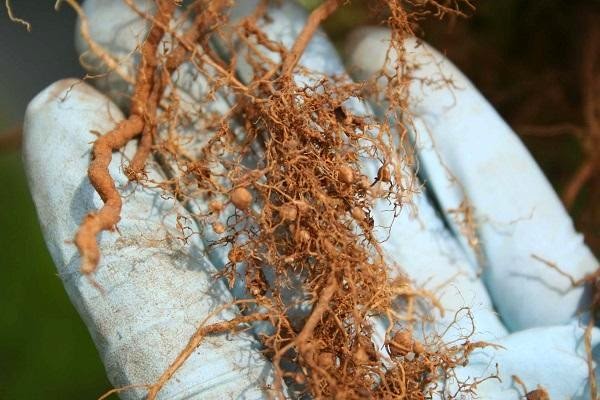
This iamge depicts root nodules. Credit: University of Illinois
Because of its aggressive behavior and its harmful effects, the invasive prairie plant Lespedeza cuneata has been added to several noxious weed lists. Research at the University of Illinois on how soil bacteria interact with the plants' roots to form nodules that fix nitrogen demonstrated that the invasive variety had superior performance when pitted against the native plant variety Lespedeza virginica.

"We expected Lespedeza cuneata to be a strong competitor when up against its native cousin that's planted primarily for prairie restoration," said U of I microbial ecologist Tony Yannarell. "There are a number of studies showing that L. cuneata grows quickly, is able to shade out its competitors, and has a high rate of nitrogen fixation, which allows it to 'self-fertilize' on unproductive soils."
Yannarell explained that Lespedeza plants establish a "partnership" with bacteria in the soil to form nodules that fix nitrogen. "We wanted to demonstrate that the partners in this symbiosis matter," he said.
Because the nitrogen-fixing gene is in the bacteria, the first step in the research was to identify bacteria that have the gene. "We started with isolating a pool of 50 bacteria [from the root nodules of invasive and native Lespedezas] and discovered that some of them weren't traditional nodule-forming bacteria."

Ultimately, seven bacteria were identified and used in a three-month greenhouse experiment in which various combinations of native and invasive varieties of Lespedeza were grown together in pots. Of the seven, five bacteria were found to benefit the invader and two did not benefit either of the plant varieties.

"We were hoping to be able to change the degree of competitiveness by using different varieties of Lespedeza by varying the bacteria," Yannarell said. "It turned out that none of the bacteria seemed to be better for the native plant.

"A really intriguing pattern that we found is that a lot of these strains of bacteria that are good for the invader belong to the Bradyrhizobium genus of bacteria that's been shown in other parts of the world to be good at fixing nitrogen so this was one more confirmation of that information," Yannarell said.

Yannarell said that this study provides yet another piece in the ecological puzzle.

The invasive Lespedeza cuneata was intentionally brought into the United States from Japan near the end of the 1800s. At the time, people liked its nitrogen-fixing capacity and soil fertilization. It was intended to be used to stabilize river banks and rehabilitate poor soil. Yannarell said that it has been recommended as wildlife forage, and some think that it has tannins that can act as a deworming treatment for goats. Now, however, it's considered to be a noxious weed that grows in the South and Midwest. It is commonly called silky bush clover.

Yannarell stressed that there are a lot of different species of Lespedeza that are native to North America and indicative of high-quality prairie. Although Lespedeza cuneata isn't a plant that would be intentionally planted by prairie restorationists, it has been seen in prairie seed mixes.

"Invasive Lespedeza cuneata and native Lespedeza virginica experience asymmetrical benefits from rhizobial symbionts," was published in Plant and Soil and was co-authored by Lingzi Hu, Ryan R. Busby, and Dick L. Gebhart. The work was supported by a grant from the U.S. Army Engineer Research and Development Center and by the Cooperative State Research, Education and Extension Service, U.S. Department of Agriculture.

Source: University of Illinois College of Agricultural, Consumer and Environmental Sciences (ACES)

Maize and bacteria: A one-two punch knocks copper out of stamp sand

Written By Unknown on Monday, December 8, 2014 | 5:06 AM

Maize plants grown in stamp sand inoculated with bacteria, left, were considerably more robust than those grown in stamp sand alone, right. This research could lead to new remediation techniques for soils contaminated by copper and other heavy metals.
Credit: Image courtesy of Michigan Technological University
Scientists have known for years that together, bacteria and plants can remediate contaminated sites. Ramakrishna Wusirika, of Michigan Technological University, has determined that how you add bacteria to the mix can make a big difference.

He has also shed light on the biochemical pathways that allow plants and bacteria to clean up some of the worst soils on the planet while increasing their fertility.

Wusirika, an associate professor of biological sciences, first collected stamp sands near the village of Gay, in Michigan's Upper Peninsula. For decades, copper mining companies crushed copper ore and dumped the remnants -- an estimated 500 million tons of stamp sand -- throughout the region. Almost nothing grows on these humanmade deserts, which are laced with high concentrations of copper, arsenic and other plant-unfriendly chemicals.

Then, Wusirika and his team planted maize in the stamp sand, incorporating bacteria in four different ways:
1. mixing it in the stamp sand before planting seed;
2. coating seed with bacteria and planting it;
3. germinating seeds and planting them in soil to which bacteria were added; and
4. the conventional method, immersing the roots of maize seedlings in bacteria and planting them in stamp sand.

After 45 days, the team uprooted the plants and measured their dry weight. All maize grown with bacteria was significantly more vigorous -- from two to five times larger -- than the maize grown in stamp sand alone. The biggest were those planted as seedlings or as germinated seeds.

However, when the researchers analyzed the dried maize, they made a surprising discovery: the seed-planted maize took up far more copper as a percentage of dry weight. In other words, the smaller plants pulled more copper, ounce per ounce, out of the stamp sands than the bigger ones.

That has implications for land managers trying to remediate contaminated sites, or even for farmers working with marginal soils, Wusirika said. The usual technique -- applying bacteria to seedlings' roots before transplanting -- works fine in the lab but would be impractical for large-scale projects. This could open the door to simple, practical remediation of copper-contaminated soils.

But the mere fact that all the plants grown with bacteria did so well also piqued his curiosity. "When we saw this, we wondered what the bacteria were doing to the soil," Wusirika said. "Based on our research, it looks like they are improving enzyme activity and increasing soil fertility," in part by freeing up phosphorus that had been locked in the rock.

The bacteria are also changing copper into a form that the plants can take up. "With bacteria, the exchangeable copper is increased three times," he said. "There's still a lot of copper that's not available, but it is moving in the right direction."

By analyzing metabolic compounds, the team was able to show that the bacteria enhance photosynthesis and help the plants make growth hormones. Bacteria also appear to affect the amount phenolics produced by the maize. Phenolics are antioxidants similar to those in grapes and red wine.
Compared to plants grown in normal soil without bacteria, plants grown in stamp sand alone showed a five-fold increase in phenolics. However, phenolics in plants grown in stamp sand with bacteria showed a lesser increase.

"Growing in stamp sand is very stressful for plants, and they respond by increasing their antioxidant production," Wusirika said. "Adding the metal-resistant bacteria enables the plants to cope with stress better, resulting in reduced levels of phenolics."

"There's still a lot to understand here," he added. "We'd like to do a study on stamp sands in the field, and we'd also like to work with plants besides maize. We think this work has applications in organic agriculture as well as remediation."

Source:  Michigan Technological University
 
Support : Creating Website | Johny Template | Mas Template
Copyright © 2011. The planet wall - All Rights Reserved
Template Created by Easy Blogging Published by Mas Template
Proudly powered by Blogger