Latest Post
Showing posts with label CHEMISTRY. Show all posts

Study reveals how oxygen is like kryptonite to titanium

Written By Unknown on Friday, February 6, 2015 | 1:58 AM

UC Berkeley scientists have found the mechanism by which titanium, prized for its high strength-to-weight ratio and natural resistance to corrosion, becomes brittle with just a few extra atoms of oxygen.

WATCH VIDEO and Read Full Artical
Shown is a cross section of grade 3 titanium (containing 0.3 percent oxygen) that has been put under stress and deformed. The defects in the crystal are evident. Oxygen impurities forced the defects to spread onto different planes of the material. (Image by Qian Yu)

The discovery, described in the Feb. 6 issue of the journal Science, has the potential to open the door to more practical, cost-effective uses of titanium in a broader range of applications. The popular silver-gray metal can already be found in high-end bicycles, laptops and human implants, among other products. But high-grade titanium with low levels of oxygen is hard to come by, and the expense of purifying the metal has prevented its wider use in applications for the construction, automotive and aerospace industries.

“If you could process titanium in a way that retained its optimal properties but at a cost comparable to aluminum, you would find uses in cars, trucks, aircraft and ships,” said study senior author Andrew Minor, an associate professor of materials science and engineering and faculty scientist at Lawrence Berkeley National Laboratory. “The high corrosion resistance and excellent specific properties of titanium are very attractive, and reducing the costs to the level of aluminum would make using the material a no-brainer.”

Minor led a research team from the department of materials science and engineering that focused on solving the long-standing mystery in metallurgy of how oxygen causes such a profound change in the characteristics of metals.

“Oxygen is like poison to titanium,” said Minor. “With more oxygen, the material gets harder and more susceptible to cracks, qualities that are not desirable for structural materials.”

A good structural material will have the right balance of ductility — the ability to bend in response to stress — and strength. Minor noted that glass is strong and hard, but not ductile, which is why that material is not used to build vehicles or bridges.
The light blue lines in this schematic illustrate a moving defect, or dislocation, in titanium. The interaction between the dislocation and an oxygen impurity (red atom) leads to the creation of additional dislocations, shown as dark blue lines. (Image by Liang Qi)

Minor added that while many metals have the potential to become brittle with oxygen, titanium is particularly sensitive to even tiny bits of the element. Grade 3 titanium is only 0.3 percent oxygen, yet it is one-third as tough as grade 1 titanium, which is 0.1 percent oxygen. Understanding how oxygen hardens titanium offers a target for research into control of the process, the study authors said.

The researchers subjected various grades of titanium samples to nanocompression tests and examined the resulting impact using advanced transmission electron microscopy techniques and quantum mechanical predictions of defect structures. They found that the interactions between oxygen and the crystalline defects, known as dislocations, that are characteristic of titanium were key to how the material hardened.

The researchers found that oxygen atoms acted like bumps in the road for the corkscrew-shaped dislocations found in titanium. “The mechanical shuffling that occurs as dislocations pop up and over those atomic bumps creates a domino effect of more dislocations,” said study co-author Daryl Chrzan, a professor of materials science and engineering who led the theoretical effort in the project. With increased oxygen, the titanium becomes more difficult to bend and therefore more susceptible to cracking, the researchers found.

A similar effect is seen by bending a paper clip until it breaks. The more the metal bends, the greater the number of dislocations. Dislocations interfere with the motion of other defects, making the paper clip more difficult to bend. Eventually, the number of dislocations is so high that the paper clip can no longer bend, and instead it breaks.

“Now that we know what it is about the oxygen found in inexpensive titanium that causes the material to harden, we can work on figuring out a way to process it to move oxygen atoms to a place where they don’t cause problems,” said study co-author Mark Asta, a professor of materials science and engineering.

Minor noted that this is already done in the semiconductor industry since oxygen and other impurities are also damaging to silicon-based microprocessors.

Other co-authors of the study included researchers from the Berkeley Lab, Japan’s Nuclear Science and Engineering Directorate and Rolls Royce.

The Office of Naval Research helped support this work. Experiments were performed at the National Center for Electron Microscopy in the Molecular Foundry at Berkeley Lab, which is supported by the U.S. Department of Energy.

Source: UC Berekely

Feelings of awe and joy can bolster your mental and physical health.

POSITIVE EMOTIONS CAN STRENGTHEN YOUR IMMUNE SYSTEM
              POSITIVE EMOTIONS CAN STRENGTHEN YOUR IMMUNE SYSTEM
                                         Image Credit: Mens Health

The wonders of the world can be just as good for your health as they are for your enjoyment, suggests a UC Berkley study.

Researchers have linked positive emotions—awe, contentment, spirituality—with lower levels of pro-inflammatory cytokines, proteins that signal your immune system to work harder and bolster good health.

In two separate experiments, more than 200 young adults were asked to log the extent to which they experienced amusement, awe, compassion, joy, love, and pride on a given day. Samples of gum and cheek tissue taken that same day showed that those who experienced more of these positive emotions had the lowest levels of the cytokine Interleukin 6, a marker of inflammation that can cause autoimmune disease and depression.

“That awe, wonder and beauty promote healthier levels of cytokines suggests that the things we do to experience these emotions—a walk in nature, losing oneself in music, beholding art—has a direct influence upon health and life expectancy,” says UC Berkeley psychologist Dacher Keltner, a co-author of the study.

An added emphasis on spirituality and mindfulness may just be enough to get you through this winter happy and healthy. 

Source: Mensfitness

Ultrasounds dance the 'moonwalk' in new metamaterial

Written By Unknown on Thursday, January 15, 2015 | 6:26 PM

Silicone beads embedded in a water-based gel (photograph is ~2 cm across). Credit: © CRPP
Metamaterials have extraordinary properties when it comes to diverting and controlling waves, especially sound and light: for instance, they can make an object invisible, or increase the resolving power of a lens. Now, researchers at the Centre de Recherche Paul Pascal (CNRS) and the Institut de Mรฉcanique et d'Ingรฉnierie de Bordeaux (CNRS/Universitรฉ de Bordeaux/Bordeaux INP/Arts et Mรฉtiers ParisTech) have developed the first three-dimensional metamaterials by combining physico-chemical formulation and microfluidics technology. This is a new generation of soft metamaterials that are easier to shape. In their experiment, the researchers got ultrasonic oscillations to move backwards while the energy carried by the wave moved forwards. Their work opens up new prospects, especially for high-resolution imaging (ultrasonography). It is published on 15 December 2014 in the journal Nature Materials.

Since the 2000s, the international scientific community has seen interest in metamaterials and their extraordinary properties grow exponentially. A metamaterial is a medium in which the phase velocity of light or sound waves can be negative (the material is said to have a negative refractive index).. In such a medium, the phase of the wave (the successive oscillations) and the energy carried by this same wave move in opposite directions. This property is not found in any natural homogeneous medium.

To obtain a metamaterial, it is necessary to make a heterogeneous medium that contains a large number of inclusions (known as microresonators). The usual way is to use micromechanical methods (etching, deposition, etc) to machine solid supports that will have the properties of metamaterials in one or two dimensions. However, this method cannot be used to work with soft matter at the micrometer scales required for ultrasounds, and the materials obtained remain limited to one or two dimensions.

In this study, the researchers developed a new type of metamaterial, in the fluid phase, formed of porous silicone microbeads embedded in a water-based gel. This metafluid is the first three-dimensional metamaterial to work at ultrasonic frequencies. In addition, due to its fluid nature, it can be made using physico-chemical processes and microfluidics technologies, which are much easier to implement than micromechanical methods.

One of the properties of porous media is that sound travels through them at very low speed (a few tens of meters per second) compared to water (1500 meters per second). Due to this sharp contrast, the whole suspension has the properties of a metamaterial provided the bead concentration is sufficient: when the researchers studied the propagation of ultrasonic waves through this medium, they directly measured a negative refractive index. Within such a metafluid, the energy carried by the wave travels from the emitter to the receiver, as expected, whereas the oscillations appear to move backwards in the opposite direction, rather like a dancer doing the 'moonwalk'.

These results open the way to numerous applications ranging from high-resolution ultrasound imaging to sound insulation and stealth in underwater acoustics. In addition, the soft-matter physico-chemical techniques used to make this metamaterial makes it possible to produce fluid or flexible materials with adaptable shapes, potentially at the industrial scale.

The simplest element: Turning hydrogen into 'graphene'

Written By Unknown on Wednesday, January 14, 2015 | 5:26 PM

This image is a comparison of the carbon compound graphene with a similar hydrogen-based structure synthesized by Carnegie scientists. Credit: Carneige's Ivan Naumov and Russell Hemley
New work from Carnegie's Ivan Naumov and Russell Hemley delves into the chemistry underlying some surprising recent observations about hydrogen, and reveals remarkable parallels between hydrogen and graphene under extreme pressures. Their work is the cover story in the December issue of Accounts of Chemical Research.

Hydrogen is the most-abundant element in the cosmos. With only a single electron per atom, it is deceptively simple. As a result, hydrogen has been a testing ground for theories of the chemical bond since the birth of quantum mechanics a century ago. Understanding the nature of chemical bonding in extreme environments is crucial for expanding our understanding of matter over the broad range of conditions found in the universe.

Observing hydrogen's behavior under very high pressures has been a great challenge for researchers. But recently teams have been able to observe that at pressures of 2-to-3.5 million times normal atmospheric pressure it transforms into an unexpected structure consisting of layered sheets, rather than a close-packed metal as had been predicted many years ago.

These hydrogen sheets resemble the carbon compound graphene. Graphene's layers are each constructed of a honeycomb structure made of six-atom carbon rings. This conventional carbon graphene, first synthesized about a decade ago, is very light, but incredibly strong, and conducts heat and electricity very efficiently. These properties promise revolutionary technology, including advanced optical electronics for screens, high-functioning photovoltaic cells, and enhanced batteries and other energy storage devices.

The new work from Naumov and Hemley shows that the stability of the unusual hydrogen structure arises from the intrinsic stability of its hydrogen rings. These rings form because of so-called aromaticity, which is well understood in carbon-containing molecules such as benzene, as well as in graphene. Aromatic structures take on a ring-like shape that can be thought of as alternating single and double bonded carbons. But what actually happens is that the electrons that make up these theoretically alternating bonds become delocalized and float in a shared circle around the inside of the ring, increasing stability.

Naumov and Hemley's study also indicates that hydrogen initially becomes a dark poorly conducting metal like graphite instead of a conventional shiny metal and a good conductor, as was originally suggested in theoretical calculations going back to the 1930's using early quantum mechanical models for solids.

Though the discovery of this layered sheet character of dense hydrogen has come as a surprise to many, chemists 30 years ago--before the discovery of graphene--predicted the structure based on simple chemical considerations. Their work is validated and extended by the new findings.

"Overall, our results indicate that chemical bonding occurs over a much broader range of conditions than people had previously considered. However, the structural effects of that chemical bonding under extreme conditions can be very different than that observed under the ordinary conditions that are familiar to us," Hemley said.

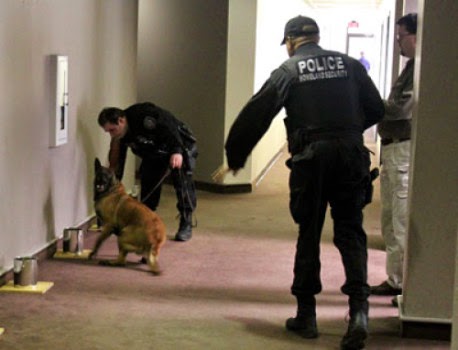
Study reveals how dogs detect explosives, offers new training recommendations

A new study found dogs react best to the actual explosive, calling into question the use of products designed to mimic the odor of C-4 for training purposes. Credit: Image courtesy of Indiana University-Purdue University Indianapolis School of Science
A research team at Indiana University-Purdue University Indianapolis (IUPUI) has helped determine the science behind how canines locate explosives such as Composition C-4 (a plastic explosive used by the U.S. military). The study found the dogs react best to the actual explosive, calling into question the use of products designed to mimic the odor of C-4 for training purposes. These findings are the culmination of a four-year contract funded by the U.S. Department of Defense (DOD).

"Appropriately, dogs that are trained to find real explosives are going to find real explosives and not much else," said John Goodpaster, Ph.D., associate professor of chemistry and chemical biology and director for the Forensic and Investigative Sciences Program in the School of Science at IUPUI.

The effectiveness of trained detector dogs is well established, but the study sought to determine which chemical compounds cause a dog to recognize a particular explosive and alert to it. Previous studies have suggested that certain non-explosive chemicals emitted by Composition C-4 cause dogs to alert, and that these specific chemicals could be used as mimic substances to train the dogs in place of real explosives.

In the first phase of the study, IUPUI researchers discovered that the non-explosive chemicals given off by C-4 mimics also are present in a variety of everyday plastic objects. Objects tested included PVC pipes, electrical tape, movie tickets, a plastic grocery bag and plastic food wrapping. Several of the tested items emitted appreciable levels of a mimic compound recommended by some vendors for training canines.

The second phase exposed 33 trained canines from the DOD, Department of Justice, Amtrak and other agencies to these vapors to see if the dogs would respond. The field trials demonstrated that the dogs failed to respond in any significant way to specific odor compounds found in C-4. The results indicate that if the dogs are trained on the full scent, they will only detect real explosives.

"The canines are not easily fooled -- you can't pick and choose components of explosive odors and expect the dog to respond," Goodpaster said. "Dogs are specific and it's the full scent that causes them to alert."

The study also sought to better establish the scientific facts needed for canine detection to be legally admissible evidence -- an effort that found using mimic compounds could present challenges in court. By training with real explosives, false positives are unlikely in the field. Overall, the team recommended that dogs be trained with actual, not mimic, explosives.

While there is technology available to search for explosives, canines remain the best option because of their speed, sensitivity and ability to search large numbers of items, Goodpaster said. Co-authors on the study include current and former IUPUI School of Science undergraduate and graduate students: William Kranz, Kelley Kitts, Nicholas Strange, Joshua Cummins and Erica Lotspeich.

The full study appears in the March 2014 Forensic Science International.

Source: University-Purdue University Indianapolis School of Science

Sniffing-out smell of disease in feces: 'Electronic nose' for rapid detection of Clostridum difficile infection

This image depicts from lef to right Dr Martha Clokie, Professor Andy Ellis and Professor Paul Monks from the University of Leicester with the mass spectrometer. Credit: University of Leicester
A fast-sensitive "electronic-nose" for sniffing the highly infectious bacteria C-diff, that causes diarrhea, temperature and stomach cramps, has been developed by a team at the University of Leicester.

Using a mass spectrometer, the research team has demonstrated that it is possible to identify the unique 'smell' of C-diff which would lead to rapid diagnosis of the condition.
What is more, the Leicester team say it could be possible to identify different strains of the disease simply from their smell -- a chemical fingerprint -- helping medics to target the particular condition.

The research is published on-line in the journal Metabolomics.

Professor Paul Monks, from the Department of Chemistry, said: "The rapid detection and identification of the bug Clostridium difficile (often known as C-diff) is a primary concern in healthcare facilities. Rapid and accurate diagnoses are important to reduce Clostridum difficile infections, as well as to provide the right treatment to infected patients.

"Delayed treatment and inappropriate antibiotics not only cause high morbidity and mortality, but also add costs to the healthcare system through lost bed days. Different strains of C. difficile can cause different symptoms and may need to be treated differently so a test that could determine not only an infection, but what type of infection could lead to new treatment options."

The new published research from the University of Leicester has shown that is possible to 'sniff' the infection for rapid detection of Clostridium difficile. The team have measured the Volatile Organic Compounds (VOCs) given out by different of strains of Clostridium difficile and have shown that many of them have a unique "smell." In particular, different strains show different chemical fingerprints which are detected by a mass spectrometer.

The work was a collaboration between University chemists who developed the "electronic-nose" for sniffing volatiles and a colleague in microbiology who has a large collection of well characterised strains of Clostridium difficile.

The work suggests that the detection of the chemical fingerprint may allow for a rapid means of identifying C. difficile infection, as well as providing markers for the way the different strains grow.

Professor Monks added: "Our approach may lead to a rapid clinical diagnostic test based on the VOCs released from faecal samples of patients infected with C. difficile. We do not underestimate the challenges in sampling and attributing C. difficile VOCs from fecal samples."

Dr Martha Clokie, from the Department of Microbiology and Immunology, added: "Current tests for C. difficile don't generally give strain information -- this test could allow doctors to see what strain was causing the illness and allow doctors to tailor their treatment."

Professor Andy Ellis, from the Department of Chemistry, said: "This work shows great promise. The different strains of C-diff have significantly different chemical fingerprints and with further research we would hope to be able to develop a reliable and almost instantaneous tool for detecting a specific strain, even if present in very small quantities."

Simple textiles can be used with catalysts to enable complex chemical reactions

Written By Unknown on Monday, January 12, 2015 | 7:55 AM

To attach the "chemical tools" to the nylon fibers the chemist simply irradiate the soaked textile with UV light.
In future, it will be much easier to produce some active pharmaceutical substances and chemical compounds than was the case to date. An international team working with chemists from the Max-Planck-Institut fรผr Kohlenforschung in Mรผlheim an der Ruhr have immobilised various catalysts on nylon in a very simple way. Catalysts mediate between the reagents in a chemical reaction and control the process leading to the desired end product. When textile material is used as a support for the chemical auxiliaries, the reaction can proceed on a large surface thereby increasing its efficiency.

One of the catalysts that the researchers used in this way plays an important role in the synthesis of a pharmaceutical agent which could only be used previously in dissolved form, making the production process very complicated and expensive. Immobilising this catalyst on fabric simplifies production considerably. This process may be expected to yield similar advantages for other chemical processes.

Functional textiles are usually understood as the textiles used to make windproof jackets, breathable footwear and particularly effective thermal underwear. However, the term could soon refer to something else -- textiles which are "functionalised" with the help of organic catalysts. Working in collaboration with scientists from the Deutsches 
Textilforschungszentrum in Krefeld and Sungkyunkwan University in Suwon, Korea, researchers at the Max-Planck-Institut fรผr Kohlenforschung in Mรผlheim an der Ruhr have developed a process for immobilising different organic catalysts on textiles with the help of ultraviolet light. The fabric thereby acts as a support for the substances on which a chemical reaction occurs.

Up to now, science has focused more on the macroscopic functionality of textiles, for example clothing, explains Dr. Ji-Woong Lee, who recently completed his doctorate at the Max-Planck-Institut fรผr Kohlenforschung under the supervision of Professor Benjamin List, head of the Institute's Homogenous Catalysis Group. "As opposed to this, our method can give simple textiles microscopic functionalities," explains the Korean scientist. Together with his colleagues, Dr. Lee armed pieces of nylon with catalysts. The latter can be imagined as chemical tools which fulfil various tasks during chemical reactions.

Excellent yields, little wear and tear

For their tests, the Mรผhlheim-based researchers used three organic catalysts: a base (dimethylaminopyridine, DMAP), a sulfonic acid and a catalyst which functions as both an acid and a base. The latter is used in the pharmaceuticals industry to steer a reaction to one of two products, which are chemically completely identical. The two forms have mirror-image structures, like a left and right hand, but only one variant has the desired medical effect. Up to now, the catalyst that generates this variant could only be used in dissolved form and then had to be separated again. The complicated separation process could be avoided using a catalyst immobilised on fabric.

To attach the catalysts to the nylon fibres, the chemists irradiated the textile to which a catalyst was applied with UV light for five minutes -- but no longer, as this would impede the activity of the catalyst and its immobilisation on the nylon. A comparable process did not exist up to now.

The catalysts, which were practically interwoven with the fabric, displayed all of the characteristics that the chemists expect from such a system: the result of the chemical reactions which the scientists undertook with the catalyst-loaded nylon strips is impressive. 

All three catalysts converted around 90 percent of the source materials to the desired products. And the catalyst which is used in the pharmaceutical industry and only generates one out of two mirror-image molecules, achieved a success rate of over 95 percent without showing any major signs of wear and tear. Ji-Woong Lee carried out several hundred test-runs and observed that the catalysts relinquished little of their functionality.

A large surface makes chemical reactions more efficient

Compared with other ways of immobilising catalysts, "organotextile catalysis" has several advantages: in particular, it provides the reagents with a larger surface than other supports, for example plastic spheres or foils -- the larger the surface, the more efficiently a reaction proceeds. Moreover, nylon is flexible and very inexpensive. Dry textiles loaded with catalysts are easy to transport, which means that it is simpler to meet the requirements for some chemical processes where it is practically impossible to set up sophisticated chemical systems. For example, organotextile catalysis could help in the treatment of water in locations where people are cut off from the water supply.

"Our method enables the low-cost production of long-term functionalised textiles without causing any pollution," says Ji-Woong Lee. He is entirely convinced that the process can be applied in several scientific areas -- and industrial processes. "In addition to chemistry, these could include biology, the materials science and pharmaceutics."

Source: Max-Planck-Institut fรผr Kohlenforschung

Mode of action of protein channelrhodopsin-2 decoded: Findings facilitate manufacture of optogenetic tools

Written By Unknown on Thursday, January 8, 2015 | 6:00 AM

The pore of the ion channel is opened by removing the amino acid E90. Water molecules enter and tilt Helix H2, thus opening the continuous channel. Credit: © RUB, graphics: Eisenhauer
Researchers have shed light upon the mode of action of the light-controlled channelrhodopsin-2 with high spatiotemporal resolution. This biomolecule is used in optogenetic applications, which is deployed to control the activity of living cells with light.

"The model we developed makes it possible to create customised optogenetic tools for individual applications," says Prof Dr Klaus Gerwert from the Department of Biophysics at the Ruhr-Universitรคt Bochum. Together with colleagues at the Humboldt Universitรคt zu Berlin from the team headed by Prof Dr Peter Hegemann, the Bochum researchers report about their finding in the magazine "Angewandte Chemie."

Channelrhodopsin-2 has revolutionised optogenetics

Discovered by Peter Hegemann in green algae, channelrhodopsin-2 is the central light-activated channel protein in optogenetics. If this ion channel is applied to nerve cells, the channels can be opened by light, thus activating the cell. "The application of channelrhodopsin-2 in optogenetics has revolutionised neurobiology in the recent years," says Klaus Gerwert. The magazine "Nature Methods" awarded this process as "Method of the Year" in 2010. "However, scientists had not been aware of what is actually happening inside a protein and thus ultimately triggers its activation," continues the Bochum researcher. But it is the understanding of processes on the atomic level that is essential for optimising the protein specifically for its applications.

"EHT" model describes the mode of action of channelrhodopsin-2

With time-resolved vibrational spectroscopy and bio-molecular simulations, the Bochum-Berlin team has now closed that gap. The EHT (E90-Helix2-tilt) model describes the mode of action of channelrhodopsin-2 as follows: the light-sensitive group of the protein, i.e. the retinal, is twistedunder incidence of light. This twist then continues in the protein and opens a pore ultra fast, which is closed by amino acid E90 in the dark. E90 marks the narrowest place in the pore and opens it through a downward move , similar to the motion of a swing door, so that water can enter an empty vestibule above the narrowest place in the pore. The entering water then tilts the protein helix H2, which eventually triggers a protein-traversing open ion channel. When forming this model, the Bochum researchers benefitted from their comprehensive experience that they had gained resolving the mechanism of light-driven proton pump bacteriorhodopsin in detail.

"Protein engineering": pioneering novel optogenetic tools

"With this structural model, the next step, i.e. protein engineering, will become possible," explains Klaus Gerwert. Through mutation of the amino acid E90, the protein's properties can be controlled in a targeted manner. The conductivity or the selectivity for certain ions could be customised for specific applications, and the protein could be specifically activated with different wavelengths.

Source: Ruhr-Universitaet-Bochum

A smart fluorescent antenna for Wi-Fi applications

A charged argon gas in the fluorescent lamp emits Wi-Fi signals. Credit: Faculty of Electrical Engineering, Universiti Teknologi MARA
A new invention uses ionized gas in fluorescent light tubes to transmit Internet wireless frequency signals throughout a building with the aid of already existing electrical wiring.

Due to continuously evolving applications, the electronic communications industry requires high performance and speed efficient systems. However, the physical limitations of microwave devices limits further improvements in current technology. This predicament has led to growing interest in the use of plasma as a conductive element in microwave devices due to their unique and innovative properties, which corresponds with traditional metallic antennas.

Matter exists in four different states: solid, liquid, gas and plasma. Plasma is a type of gas in which the atoms are ionized -- they have both free negatively charged electrons and positively charged ions. These charged particles can be controlled by electromagnetic fields, allowing plasmas to be used as a controllable reactive gas.

This invention employs an ionized gas enclosed in a tube as the conducting element of an antenna. When the gas is electrically charged or ionized to plasma, it becomes conductive and allows radio frequency signals to be transmitted or received. When the gas is not ionized, the antenna element ceases to exit.

The invention features a smart fluorescent antenna with a 3G/3.75G/4G router for Wi-Fi applications. The antenna operates at the 2.4 GHz frequency band, which is suitable for Wi-Fi applications. A commercially available fluorescent tube, measuring 0.61 metres in length by 0.25 metres in diameter, is used as the plasma antenna. The gas inside the tube is a mixture of argon and mercury vapour, in the ratio 9:1. The tube is energized by a 240 V current, provided by a standard AC power supply. A glowing tube indicates that the gas inside the tube has been ionized to plasma and forms a plasma column. In this state, the plasma column becomes highly conductive and can be used as an antenna.

A coupling sleeve is positioned at the lower end of the tube, which is used to connect the plasma tube to the router. The function of the coupling sleeves is to store the electrical charge. When the gas inside the tube is sufficiently ionized into a plasma state, it becomes conductive and allows radio frequency signals to be transmitted or received.

Measurements indicate that the plasma antenna yields a return loss over 10 dB in the 2.23 GHz to 2.58 GHz frequency band. The antenna's ability to operate as either a transmitter or receiver in this particular frequency band was verified through a series of wireless transmission experiments.

The performance of this antenna was measured using the Wi-Fi Received Signal Strength 
Indicator (RSSI) technique. The product was tested for a month in the Universiti Teknologi MARA's High Frequency Antenna Laboratory. Our results show that the signal is stronger and more stable compared to others signals.

One advantage of this product is its low cost. The Wi-Fi signal can be transmitted into other rooms using only one router with a splitter cable. The fluorescent tube has dual functionality, thereby reducing the cost of buying additional antennas. Commercial antennas are made from metal elements while this invention uses plasma element as its source of material. Normal antennas can only transmit and receive radio frequencies, while this product not only can be used for transmitting and receiving radio frequency signals, but as a light emitting device as well.

Source: Universiti Teknologi MARA (UiTM)

Atoms queue up for quantum computer networks

Written By Unknown on Tuesday, January 6, 2015 | 5:04 AM

The experiment is carried out in a glass cell with very low pressure. In here is an ultra-thin glass fiber and a gas of cesium atoms. Using lasers and a magnetic field, the atoms are cooled down to almost absolute zero (minus 273 degrees Celsius) and the atoms gather as a cloud around the glass fiber. Then two laser beams with very different frequencies are transmitted into the fiber, thereby capturing atoms above the fiber surface. By measuring the difference in the speed of light for two other light beams on each side of the atoms' absorption line, you can measure the number of atoms.
Credit: Ola Jakup Joensen, Niels Bohr Institute
In order to develop future quantum computer networks, it is necessary to hold a known number of atoms and read them without them disappearing. To do this, researchers from the Niels Bohr Institute have developed a method with a trap that captures the atoms along an ultra thin glass fiber, where the atoms can be controlled. The results are published in the scientific journal, Physical Review Letters.

The research is carried out in the quantum optics laboratory in the basement of the Niels Bohr Institute in Copenhagen. The underground laboratory is set back from the road so there are no vibrations from traffic. Here, the researchers have designed experiments in which they can perform ultrasensitive trials with quantum optics.

"We have an ultra-thin glass fiber with a diameter of half a micrometer (a hundred times smaller than a strand of hair). Along this glass fiber we capture cesium atoms. They are cooled down to 100 micro Kelvin using a laser -- this is almost absolute zero, which is equivalent to minus 273 degrees Celsius. This system acts like a trap that holds the atoms on the side of the glass fiber," explains Jรผrgen Appel, Associate Professor in the research group Quantop at the Niels Bohr Institute, University of Copenhagen.

Atoms and light linked together

When light is transmitted through the glass fiber thread, the light will also move along the surface because the fiber is thinner than wavelength of the light. This creates strong interaction between the light and the atoms sitting securely above the surface of the fiber.

"We have developed a method where we can measure the number of atoms. We send two laser beams with different frequencies through the glass fiber. If there were no atoms on the fiber, the speed of light would be the same for both light beams. However, the atoms affect the two frequencies differently and by measuring the difference in the speed of light for the two light beams on each side of the atoms' absorption lines, you can measure the number of atoms along the fiber. We have shown that we can hold 2,500 atoms with an uncertainty of just eight atoms," says Jรผrgen Appel.

These are fantastic results. Without this method, you would have to use resonant light (light that the atoms absorb) and then you would scatter photons, which would kick the atoms out of the trap, says Jรผrgen Appel and explains that with this new method they can measure and control the atoms so that only 14 percent are kicked out of the trap and are lost.

"Our resolution is only limited by the natural quantum noise (the laser light's own minimal fluctuations) so our method could be used for so-called entangled states of atoms along the fiber. Such an entangled system with strongly interacting atoms and light is of great interest for future quantum computer networks," notes Jรผrgen Appel.

Nitrogen fingerprint in biomolecules could be from early sun

Written By Unknown on Sunday, December 21, 2014 | 6:34 PM

Ultraviolet light splits more readily splits molecules of nitrogen gas if one or both are the heavier isotope, nitrogen-15. Free nitrogen atoms combine with hydrogen to form ammonia molecules enriched in nitrogen-15. Credit: Image courtesy of University of California - San Diego
Chemical fingerprints of the element nitrogen vary by extremes in materials from the molecules of life to the solar wind to interstellar dust. Ideas for how this great variety came about have included alien molecules shuttled in by icy comets from beyond our solar system and complex chemical scenarios.

New experiments using a powerful source of ultraviolet light have shown that no extra-solar explanation is needed and the chemistry is straight forward, scientists from the University of California, San Diego, Hebrew University and UCLA report in the early online edition of the Proceedings of the National Academy of Sciences the week of September 29.
Nitrogen occurs in two stable forms. Nitrogen-14, with an equal number of protons and neutrons in its nucleus, is most abundant. Nitrogen-15, with an extra neutron, is far more rare, but biological molecules like proteins have larger proportions; they're enriched in nitrogen-15 relative to the nitrogen gas in Earth's atmosphere. And Earth's atmosphere itself has relatively more nitrogen-15 than other sources, such as the solar wind and Jupiter's atmosphere.
Samples from the icy comet Wild 2, retrieved by NASA's Stardust mission, and several kinds of meteorites also have relatively more nitrogen-15, and within the inhomogenous mix that makes up stony meteorites are inclusions, individual crystals that can have extremely high proportions of nitrogen-15. These observations led to the idea that the building blocks of life could have been 'seeded' on Earth, delivered perhaps by comet.

The new experiments render that hypothesis unnecessary. "We can generate this nitrogen enrichment inside the solar system. You can form all these building blocks of life inside our solar system. You don't have to bring the pieces in from outside," said Subrata Chakraborty, a project scientist in chemistry at UC San Diego and lead author of the report.

By shining a bright beam of very short wave ultraviolet light through nitrogen and hydrogen gas, Chakraborty and colleagues generated ammonia with drastically skewed ratios of nitrogen-15 relative to that found in the initial gas, which matched that of Earth's atmosphere. Pairs of nitrogen atoms -- the molecules of the gas -- were more likely to be split by UV photons if one or both atoms are the heavier version. Those freed nitrogen atoms recombined with hydrogen to form ammonia.

Ammonia molecules, a nitrogen atom bound to three hydrogen atoms, makes up a fundamental chemical group, the 'amines' the characterize amino acids, which link up in long chains to form proteins. They also join aromatic rings of carbon to form nitrogenous bases, the information carrying components of DNA and RNA. And RNA is how many think life got its start.

Light like this, with wavelengths this short, doesn't make it to Earth anymore. It's deflected by Earth's atmosphere. In fact, the experiments took place in a custom-engineered vacuum chamber aligned with the Lawrence Berkeley National Laboratory's Advanced Light Source synchrotron and were a challenge to pull off.

The chemical events that produced amines with extra nitrogen-15 would have happened long ago, probably in the icy outer reaches of the early solar nebula said Mark Thiemens, professor of chemistry at UC San Diego who directed the work. "It's the right time for this to have happened: before planets, before life."
Additional authors include Harel Muskatel of Hebrew University in Jerusalem, Teresa Jackson of UC San Diego, Musahid Ahmed of Lawrence Berkeley National Laboratory and R.D. Levine of Hebrew University and UCLA. NASA's Cosmochemistry and Origins of Solar System programs funded this work. The U.S. Department of Energy supports the operation of the Advanced Light Source.

Source:  University of California - San Diego

Easy measurement of the effect of fine dust

Written By Unknown on Thursday, December 18, 2014 | 6:05 AM

The Karlsruhe Exposure System is compact and can measure fine dust concentrations directly at the location of pollution. Credit: VITROCELL Systems GmbH
Fine dusts from industry, traffic, and households are omnipresent. Still, they are difficult to capture by reliable medical measurements. KIT researchers have now developed an exposure system, by means of which biological cells are exposed to fine dust-loaded air flows in an exact and reproducible manner. Using this system, it is possible to collect data on the adverse impact of fine dusts of variable sources in a rapid and inexpensive manner and without animal experiments being needed. In cooperation with the industry partner Vitrocell, a marketable product has been developed.

"Fine dusts may be carbon black from diesel engines, sea salt on the coast, natural dusts, or intermediate products of chemical industry," Dr. Hanns-Rudolf Paur and Sonja Mรผlhopt of Karlsruhe Institute of Technology explain. All dust grains smaller than 10 ยตm, i.e. one hundredth of a millimeter, are considered to be fine dust irrespective of their chemical composition. Dust particles smaller than 10 ยตm easily pass the upper respiratory tract of man. "They deposit in the pulmonary alveoli and may damage the lungs due to their chemical or physical properties."

To study the effects in detail, lung cells and fine dust have to be brought together in a realistic environment. Ultimately, the processes taking place in the human body from the nose to the lungs have to be reproduced. For this purpose, the air containing the fine dust is heated up to body temperature by the Karlsruhe Exposure System. The air flow is provided with about 85% humidity and reduced to the air flow rate of the lungs. For a long-term measurement series, these conditions have to be maintained exactly and reproducibly. Finally, the particle flow passes lung cell cultures cultivated with nutrient medium. 

Depending on the type of fine dust, these cultures subsequently show symptoms of inflammation, oxidation stress, or membrane damage. In parallel, the deposited particle dose is recorded by means of a precision balance.

The new Exposure System is much closer to reality than previous methods that collected fine dust from air or exhaust gas and stirred it into the nutrient liquid. At the same time, the Exposure System works more rapidly for many applications and is cheaper than a study based on animal experiments. Thanks to its compactness, the Karlsruhe Exposure System can also be used for measurements at the place of fine dust development or pollution. "The limitations of conventional methods were overcome by the close, interdisciplinary cooperation of biologists and process engineers at KIT," the Head of the project, Sonja Mรผlhopt, says. "With the Karlsruhe Exposure System, we now have a technology that will improve the protection of the environment and mankind."

"Research at KIT was the basis of a process with a high industry potential," Tobias Krebs of the company Vitrocell Systems (Waldkirch) says. "Together, we now plan to commercialize this product." The impact of fine dusts plays an important role in fundamental research as well as in many areas of application. According to the EU Directive on Chemicals REACH, chemical industry is obliged to classify its products in various hazard categories. 
Manufacturers of lung medicine, such as asthma sprays, are now enabled to test new substances in a close-to-reality manner. New and old biomass fuels may also be relevant fine dust sources.

Fracking and pollution: Technology-dependent emissions of gas extraction in the US

The KIT measurement instrument on board of a minivan directly measures atmospheric emissions on site with a high temporal resolution.
Credit: Photo: F. Geiger/KIT
Not all boreholes are the same. Scientists of the Karlsruhe Institute of Technology (KIT) used mobile measurement equipment to analyze gaseous compounds emitted by the extraction of oil and natural gas in the USA. For the first time, organic pollutants emitted during a fracking process were measured at a high temporal resolution using a vapor capture system. The highest values measured by this process exceeded typical mean values in urban air by a factor of about one thousand, as was reported in the ACP journal.

Emission of trace gases by oil and gas fields was studied by the KIT researchers in the USA (Utah and Colorado) together with US institutes. Background concentrations and the waste gas plumes of single extraction plants and fracking facilities were analyzed. The air quality measurements of several weeks duration took place under the "Uintah Basin Winter Ozone Study" coordinated by the National Oceanic and Atmospheric Administration (NOAA).

The KIT measurements focused on health-damaging aromatic hydrocarbons in air, such as carcinogenic benzene. Maximum concentrations were determined in the waste gas plumes of boreholes. Some extraction plants emitted up to about a hundred times more benzene than others. The highest values of some milligrams of benzene per cubic meter air were measured downstream of an open fracking facility, where returning drilling fluid is stored in open tanks and basins. Much better results were reached by oil and gas extraction plants and plants with closed production processes. In Germany, benzene concentration at the workplace is subject to strict limits: The Federal Emission Control Ordinance gives an annual benzene limit of five micrograms per cubic meter for the protection of human health, which is smaller than the values now measured at the open fracking facility in the US by a factor of about one thousand. The researchers published the results measured in the journal Atmospheric Chemistry and Physics ACP.

"Characteristic emissions of trace gases are encountered everywhere. These are symptomatic of gas and gas extraction. But the values measured for different technologies differ considerably," Felix Geiger of the Institute of Meteorology and Climate Research (IMK) of KIT explains. He is one of the first authors of the study. By means of closed collection tanks and so-called vapor capture systems, for instance, the gases released during operation can be collected and reduced significantly.

"The gas fields in the sparsely populated areas of North America are a good showcase for estimating the range of impacts of different extraction and fracking technologies," explains Professor Johannes Orphal, Head of IMK. "In the densely populated Germany, framework conditions are much stricter and much more attention is paid to reducing and monitoring emissions."

Fracking is increasingly discussed as a technology to extract fossil resources from unconventional deposits. Hydraulic breaking of suitable shale stone layers opens up the fossil fuels stored there and makes them accessible for economically efficient use. For this purpose, boreholes are drilled into these rock formations. Then, they are subjected to high pressure using large amounts of water and auxiliary materials, such as sand, cement, and chemicals. The oil or gas can flow to the surface through the opened microstructures in the rock. Typically, the return flow of the aqueous fracking liquid with the dissolved oil and gas constituents to the surface lasts several days until the production phase proper of purer oil or natural gas. This return flow is collected and then reused until it finally has to be disposed of. Air pollution mainly depends on the treatment of this return flow at the extraction plant. In this respect, currently practiced fracking technologies differ considerably. For the first time now, the resulting local atmospheric emissions were studied at a high temporary resolution. Based on the results, emissions can be assigned directly to the different plant sections of an extraction plant. For measurement, the newly developed, compact, and highly sensitive instrument, a so-called proton transfer reaction mass spectrometer (PTR-MS), of KIT was installed on board of a minivan and driven closer to the different extraction points, the distances being a few tens of meters. In this way, the waste gas plumes of individual extraction sources and fracking processes were studied in detail.

New conversion process turns biomass 'waste' into lucrative chemical products

Written By Unknown on Wednesday, December 17, 2014 | 8:01 PM

Purdue's R.B. Wetherill Professor of Chemistry, holds a small vial containing results of a new catalytic process that can convert the lignin in wood into high-value chemical products for use in fragrances and flavoring.
Credit: Purdue University photo/Mark Simons
A new catalytic process is able to convert what was once considered biomass waste into lucrative chemical products that can be used in fragrances, flavorings or to create high-octane fuel for racecars and jets.

A team of researchers from Purdue University's Center for Direct Catalytic Conversion of Biomass to Biofuels, or C3Bio, has developed a process that uses a chemical catalyst and heat to spur reactions that convert lignin into valuable chemical commodities. Lignin is a tough and highly complex molecule that gives the plant cell wall its rigid structure.
Mahdi Abu-Omar, the R.B. Wetherill Professor of Chemistry and Professor of Chemical Engineering and associate director of C3Bio, led the team.

"We are able to take lignin -- which most biorefineries consider waste to be burned for its heat -- and turn it into high-value molecules that have applications in fragrance, flavoring and high-octane jet fuels," Abu-Omar said. "We can do this while simultaneously producing from the biomass lignin-free cellulose, which is the basis of ethanol and other liquid fuels. We do all of this in a one-step process."

Plant biomass is made up primarily of lignin and cellulose, a long chain of sugar molecules that is the bulk material of plant cell walls. In standard production of ethanol, enzymes are used to break down the biomass and release sugars. Yeast then feast on the sugars and create ethanol.

Lignin acts as a physical barrier that makes it difficult to extract sugars from biomass and acts as a chemical barrier that poisons the enzymes. Many refining processes include harsh pretreatment steps to break down and remove lignin, he said.

"Lignin is far more than just a tough barrier preventing us from getting the good stuff out of biomass, and we need to look at the problem differently," Abu-Omar said. "While lignin accounts for approximately 25 percent of the biomass by weight, it accounts for approximately 37 percent of the carbon in biomass. As a carbon source lignin can be very valuable, we just need a way to tap into it without jeopardizing the sugars we need for biofuels."

The Purdue team developed a process that starts with untreated chipped and milled wood from sustainable poplar, eucalyptus or birch trees. A catalyst is added to initiate and speed the desired chemical reactions, but is not consumed by them and can be recycled and used again. A solvent is added to the mix to help dissolve and loosen up the materials. The mixture is contained in a pressurized reactor and heated for several hours. The process breaks up the lignin molecules and results in lignin-free cellulose and a liquid stream that contains two additional chemical products, Abu-Omar said.

The liquid stream contains the solvent, which is easily evaporated and recycled, and two phenols, a class of aromatic hydrocarbon compounds used in perfumes and flavorings. A commonly used artificial vanilla flavoring is currently produced using a phenol that comes from petroleum, he said.

The team also developed an additional process that uses another catalyst to convert the two phenol products into high-octane hydrocarbon fuel suitable for use as drop-in gasoline. The fuel produced has a research octane rating greater than100, whereas the average gas we put into our cars has an octane rating in the eighties, he said.

The processes and resulting products are detailed in a paper published online in the Royal Society of Chemistry journal Green Chemistry. The U.S. Department of Energy funded the research.

In addition to Abu-Omar, co-authors include Trenton Parsell, a visiting scholar in the Department of Chemistry; chemical engineering graduate students Sara Yohe, John Degenstein, Emre Gencer, and Harshavardhan Choudhari; chemistry graduate students Ian Klein, Tiffany Jarrell, and Matt Hurt; agricultural and biological engineering graduate student Barron Hewetson; Jeong Im Kim, associate research scientist in biochemistry; Basudeb Saha, associate research scientist in chemistry; Richard Meilan, professor of forestry and natural reserouces; Nathan Mosier, associate professor of agricultural and biological engineering; Fabio Ribeiro, the R. Norris and Eleanor Shreve Professor of Chemical Engineering; W. Nicholas Delgass, the Maxine S. Nichols Emeritus Professor of Chemical Engineering; Clint Chapple, the head and distinguished professor of biochemistry; Hilkka I. Kenttamaa, professor of chemistry; and Rakesh Agrawal, the Winthrop E. Stone Distinguished Professor of Chemical Engineering.

The catalyst is expensive, and the team plans to further study efficient ways to recycle it, along with ways to scale up the entire process, Abu-Omar said.

"A biorefinery that focuses not only on ethanol, but on other products that can be made from the biomass is more efficient and profitable overall," he said. "It is possible that lignin could turn out to be more valuable than cellulose and could subsidize the production of ethanol from sustainable biomass."

The U.S. Department of Energy-funded C3Bio center is an Energy Frontier Research Center. It is part of Discovery Park's Energy Center and the Bindley Bioscience Center at Purdue.
Purdue Research Foundation has filed patent applications and launched a startup company, Spero Energy, which was founded by Abu-Omar.

Watch Video

A new look at what's in 'fracking' fluids raises red flags: Some compounds toxic to mammals

Written By Unknown on Sunday, December 7, 2014 | 10:19 PM

Scientists are getting to the bottom of what’s in fracking fluids — with some troubling results.
Credit: Doug Duncan/U.S. Geological Survey
As the and gas drilling technique called hydraulic fracturing (or "fracking") proliferates, a new study on the contents of the fluids involved in the process raises concerns about several ingredients. The scientists presenting the work today at the 248th National Meeting & Exposition of the American Chemical Society (ACS) say that out of nearly 200 commonly used compounds, there's very little known about the potential health risks of about one-third, and eight are toxic to mammals.

William Stringfellow, Ph.D., says he conducted the review of fracking contents to help resolve the public debate over the controversial drilling practice. Fracking involves injecting water with a mix of chemical additives into rock formations deep underground to promote the release of oil and gas. It has led to a natural gas boom in the U.S., but it has also stimulated major opposition and troubling reports of contaminated well water, as well as increased air pollution near drill sites.

"The industrial side was saying, 'We're just using food additives, basically making ice cream here,'" Stringfellow says. "On the other side, there's talk about the injection of thousands of toxic chemicals.

As scientists, we looked at the debate and asked, 'What's the real story?'"
To find out, Stringfellow's team at Lawrence Berkeley National Laboratory and University of the Pacific scoured databases and reports to compile a list of substances commonly used in fracking. They include gelling agents to thicken the fluids, biocides to keep microbes from growing, sand to prop open tiny cracks in the rocks and compounds to prevent pipe corrosion.

What their analysis revealed was a little truth to both sides' stories -- with big caveats. Fracking fluids do contain many nontoxic and food-grade materials, as the industry asserts. But if something is edible or biodegradable, it doesn't automatically mean it can be easily disposed of, Stringfellow notes.
"You can't take a truckload of ice cream and dump it down the storm drain," he says, building on the industry's analogy. "Even ice cream manufacturers have to treat dairy wastes, which are natural and biodegradable. They must break them down rather than releasing them directly into the environment."
His team found that most fracking compounds will require treatment before being released. And, although not in the thousands as some critics suggest, the scientists identified eight substances, including biocides, that raised red flags. These eight compounds were identified as being particularly toxic to mammals.

"There are a number of chemicals, like corrosion inhibitors and biocides in particular, that are being used in reasonably high concentrations that potentially could have adverse effects," Stringfellow says. "Biocides, for example, are designed to kill bacteria -- it's not a benign material."

They're also looking at the environmental impact of the fracking fluids, and they are finding that some have toxic effects on aquatic life.

In addition, for about one-third of the approximately 190 compounds the scientists identified as ingredients in various fracking formulas, the scientists found very little information about toxicity and physical and chemical properties.

"It should be a priority to try to close that data gap," Stringfellow says.
He acknowledges funding from the University of the Pacific, the Bureau of Land Management and the state of California.

Source: American Chemical Society (ACS)

Was da Vinci wrong? New research shows friction and fracture are interrelated, with implications for earthquakes

Written By Unknown on Wednesday, October 29, 2014 | 8:18 PM

Overturning conventional wisdom stretching all the way to Leonardo da Vinci, new Hebrew University of Jerusalem research shows that how things break (fracture) and how things slide (friction) are closely interrelated. The breakthrough study marks an important advance in understanding friction and fracture, with implications for describing the mechanics that drive earthquakes.

Over 500 years ago, da Vinci described how rough blocks slide over one another, providing the basis for our understanding of friction to this day. The phenomenon of fracture was always considered to be something totally different.

But new research by Prof. Jay Fineberg and his graduate student Ilya Svetlizky, at the Hebrew University's Racah Institute of Physics, has demonstrated that these two seemingly disparate processes of fracture and friction are actually intimately intertwined.

Appearing in the journal Nature, their findings create a new paradigm that's very different from the da Vinci version, and, according to the researchers, give us a new understanding of how earthquakes actually occur.

Fineberg and Svetlizky produced "laboratory earthquakes" showing that the friction caused by the sliding of two contacting blocks can only occur when the connections between the surfaces are first ruptured (that is, fractured or broken) in an orderly, "organized" process that takes place at nearly the speed of sound.

How does this happen? Before any motion can occur, the blocks are connected by interlocking rough contacts that define their interface. In order for motion to occur, these connections have to be broken. This physical process of breaking is called a fracture process. This process is described by the theory of crack propagation, say the researchers, meaning that the stresses (or forces) that exist at the front edge of a crack become highly magnified, even if the overall forces being applied are initially quite small.

"The insights gained from our study provide a new paradigm for understanding friction and give us a new, fundamental description of the mechanics and behavior that drive earthquakes, the sliding of two tectonic blocks within natural faults," says Fineberg. "In this way, we can now understand important processes that are generally hidden kilometers beneath the Earth's surface."

The research was supported by the James S. McDonnell Fund, the European Research Council (grant no. 267256) and the Israel Science Foundation (grant 76/11).

Source: Hebrew University of Jerusalem
 
Support : Creating Website | Johny Template | Mas Template
Copyright © 2011. The planet wall - All Rights Reserved
Template Created by Easy Blogging Published by Mas Template
Proudly powered by Blogger