Latest Post
Showing posts with label FOREST. Show all posts

Using Technology to Help Wild Cats and People Coexist

Written By Unknown on Thursday, January 29, 2015 | 9:22 PM

In Central India, F&ES doctoral student Jennie Miller is helping develop strategies to limit the increasingly frequent interactions between humans and wild cats that have triggered massive declines in populations of tigers and leopards.
 leopard Jennie Miller
Photo courtesy of Jennie Miller
For centuries, populations of tigers and leopards in central India have plummeted in the face of habitat degradation, the loss of prey, and a rise in sport hunting. Over the last few decades, however, it has been the increases in poaching and “retaliation killings” by livestock owners that have become the greatest threats facing these big cats.
 
Jennie Miller, a doctoral student at the Yale School of Forestry & Environmental Studies, says the best strategy to stem these losses is to limit the interactions between these rare cats and livestock animals. And she’s developing strategies that use spatial technology to achieve this goal.
 
In an interview, Miller describes the relationship between wild cats and humans in this part of the world, how simple technologies can reduce conflicts, and the risks of working so close to these predators.
 
Can you describe the research you’re doing in India? 

In a nutshell, I’m creating geospatial tools to help people and big cats sustainably coexist. In many parts of Asia, people graze their livestock in landscapes shared with tigers and leopards. Big cats regularly kill domesticated livestock since they are easy prey, causing profound livelihood loses for livestock owners. For example, in the Kanha Tiger Reserve in central India where I work, more than 400 cattle, buffalo, goats, and pigs are killed each year. Though this is less than 0.5 percent of the 85,000 livestock in the area, even a small number of attacks can create a sense of insecurity and frustration for livestock owners. To reduce attacks, owners sometimes lace livestock carcasses with pesticides to poison the cats when they return to feed. Since only about 3,500 tigers remain in the wild, every cat counts for the survival of the species.
jennie miller goat Photo courtesy of Jennie Miller

My research aims to help reduce this human-carnivore conflict by minimizing carnivore attacks on livestock. I’m building spatial models to understand where tigers and leopards are most likely to attack livestock. These models also generate “risk maps” to predict where future attacks may occur to assist the Forest Department and villagers when managing and grazing livestock. If livestock can be grazed in habitats where carnivores are less likely to attack — for example, away from dense forests where tigers hunt — then coexistence between people and tigers and leopards may be more feasible.
 
What are the threats facing these animals? And, for that matter, the people who live in these communities?

Over the past few centuries, habitat degradation, prey loss, and uncontrolled sport hunting have caused massive declines in tiger and leopard populations. However, in the past few decades, poaching and retaliation killing have emerged as the two greatest immediate threats for these big cats. Recent surges in the value of tiger and leopard body parts in international markets in southeast and east Asia — where they are sold for traditional medicine — are motivating a spree of illegal poaching, especially within India, which supports half the world’s wild tigers.
 
Retaliation killing — when villagers poison carnivores after losing livestock — also contributes to species declines, particularly since these incidences often kill young dispersing tigers and leopards as they move through agricultural fields to colonize or join other populations in nearby protected areas. And poaching and retaliation killing can be closely linked, since poachers may capitalize on a livestock owner’s desire to remove a troublesome tiger.
Photo courtesy of Jennie Miller Jennie Miller interviews a forest guard
Attacks on humans are rare — far less frequent than deaths due to car accidents or even snake bites. Perhaps due to their rarity and primal essence, the media often sensationalizes these “man-eater” attacks, which can further instigate anger, fear, and retaliations from people. Nonetheless, attacks do occasionally happen. People who share forests with tigers and leopards are very aware of these risks and take precautions to avoid chances of attack, such as staying indoors at night, traveling in groups and regularly protecting small children. There is a great amount of respect — driven by a mixture of fear, appreciation and reverence — for large cats in India.
 
What does the mapping technology you’re using reveal? 

We’re at an exciting point in time where spatial technology like GPS units and satellite data are enabling the development of simple tools for management and conservation. One example is “spatial risk mapping,” which I use for my research. Basically, I recorded the GPS coordinates of hundreds of dead livestock in my study site as well as random sites to measure variation across the landscape. I combine these with information about the location of other environmental and human features, such as roads, villages, forests, and shrubs. I then build statistical models to predict the probability of a tiger or leopard attack on livestock across the landscape.
 
The end result is a map that can help visually identify where attacks might occur in the future. These maps can serve as powerful tools because they transcend language and education barriers by visually representing risk and so could be useful to help villagers in remote areas protect their livestock.
 
What have you learned so far?

Since tigers and leopards both use stalking hunting tactics to attack prey, I expected them to show similar hunting patterns. However, I found that tigers and leopards differ greatly in where they tend to kill livestock: Tigers attack most often in dense forests away from human infrastructure like roads and villages, whereas leopards kill in more open vegetation and aren’t as deterred by human presence. In fact, on several occasions, leopards boldly strolled into villages at night and killed livestock in bamboo enclosures adjacent to people’s mud huts while they slept inside!

“People generally know how to avoid tiger attacks but could perhaps benefit from more conservation support for actively protecting livestock from leopard attacks.”— Jennie Miller

I also expected livestock owners to have a strong sense of where both tigers and leopards kill. Yet when I interviewed owners and compared their perceptions about where these two cats tend to kill, I found that owners have a very accurate sense of where tigers attack but a poorer understanding of where leopards attack. I suspect this disparity occurs because tigers are constrained to hunting in dense forests but leopards can kill in a broader diversity of habitats, making it generally harder to predict where a leopard will attack. This means that people generally know how to avoid tiger attacks but could perhaps benefit from more conservation support for actively protecting livestock from leopard attacks, such as by strengthening night enclosures or hiring livestock herders. 
 
What do you hope will come out of your research?

These results provide valuable insights into how big cats, livestock, and people interact which I hope will help strengthen animal husbandry and livestock management to better protect livestock and reduce human-carnivore conflict. I’m working with the Forest Department of Kanha Tiger Reserve to integrate these spatial risk models into management to help guide their conservation efforts. For example, risk maps can be used to understand carnivore hunting behavior and patterns, especially the distinction between tigers and leopards, for developing strategies for protecting livestock. In considering the risk of an attack alongside other grazing considerations — such as browse quality and access from villages — livestock owners may also be able to make grazing decisions in a more informed way.
Photo courtesy of Jennie Miller Miller inspects the remains of a cow killed by a wild cat.
What other skills have you had to develop to conduct this research? 

Learning Hindi has enabled me to more personally relate with villagers in India to understand the ramifications of livestock losses, as well as to understand the jokes made by my field assistants. Since I surveyed dead livestock and collected tiger and leopard scat for a year, I quickly developed a tolerance for bad smells, maggots, blood, and feces. I realized this a few months into fieldwork when I found myself elbow-deep in a bucket of water and tiger feces, separating the hair from particulate matter in order to identify prey contents. And to this day, I still reach for my GPS when I smell road kill. But more seriously, I also acquired a deep respect for the villagers and forest guards who literally risk their lives daily to live alongside tigers and leopards.
 
Have you ever felt unsafe doing this work, walking in places where these animals lurk?
Definitely! Though tigers and leopards rarely attack people, one or two people — usually solitary livestock herders or forest guards — are attacked in Kanha Tiger Reserve every year. These big cats don’t usually approach groups of people, so I always took a team of three to 10 people with me when surveying livestock carcasses. We also tried to avoid visiting fresh kills to reduce the chance that the cats would still be feeding when we approached. But sometimes this couldn’t be avoided and I can recall several cases when we knew a cat was lingering nearby.
 
Once, when my team and I were walking through a dense forest towards three cow carcasses killed the night before, the villagers in front of me said they could hear the tigress walking. When we reached the carcasses a few moments later, there was fresh blood on the carcass, indicating that she had been feeding a few minutes before we arrived. That day I truly began to understand the risks that villages take in living with these cats.
 
What made you want to focus your research in India? 

In January 2005 when I was a sophomore in college, I accompanied my father, a yoga and meditation teacher, on a visit to India to meet his guru. During our trip I saw first-hand the sudden tragedy of the tsunami in coastal Chennai and also heard stories while on safari about man-eating tigers in the dense jungles of Corbett Tiger Reserve. I was mesmerized by the people’s vibrancy and resiliency despite these unpredictable hardships, and greatly impressed by the extent to which Indians are economically and spiritually connected to nature. The trip helped inspire me to major in ecology and take classes in South Asian religion, art and language, and to later return to India as a Fulbright Scholar to study bird conservation in the western Himalayas. After a year of research in India I was hooked. I hope that I can continue working in India for the rest of my life.

Study Yields Surprising Insights into Global Effects of Wood Fuel Burning

Courtesy of Adrian Ghilardi
The harvesting of wood to meet the heating and cooking demands for billions of people worldwide has less of an impact on global forest loss and carbon dioxide (CO2) emissions than previously believed, according to a new Yale-led study.

Writing in the journal Nature Climate Change, a team of researchers, including Prof. Robert Bailis of the Yale School of Forestry & Environmental Studies (F&ES), concludes that only about 27 to 34 percent of wood fuel harvested worldwide would be considered “unsustainable.” According to the assessment, “sustainability” is based on whether or not annual harvesting exceeds incremental re-growth.

The other authors are Rudi Drigo, an independent forestry specialist with international experience; and Adrian Ghilardi and Omar Masera of the National Autonomous University of Mexico.

According to the authors, the findings point to the need for more nuanced, local-specific policies that address forest loss, climate change, and public health. They also suggest that existing carbon offset methodologies used to reduce carbon emissions likely overstate the CO2 emission reductions that can be achieved through the promotion of more efficient cookstove technologies.

The study identifies a set of “hotspots” where the majority of wood extraction exceeds sustainable yields. These hotspot regions — located mainly in South Asia and East Africa — support about 275 million people who are reliant on wood fuel.
“If forests and woodlands would have been cut down anyway, then the projects designed to reduce wood fuel demand are not actually going to reduce deforestation.”— Robert Bailis
However, in other regions, the authors say, much of the wood used for this traditional heating and cooking is actually the byproduct of deforestation driven by other factors, such as demand for agricultural land, which would have occurred anyway.

“If forests and woodlands would have been cut down anyway, then the projects designed to reduce wood fuel demand are not actually going to reduce deforestation,” said Bailis, an associate professor at F&ES and lead author of the study. “Sure, you’re reducing wood use, but the underlying pressures driving deforestation are still out there.”

The results stand in contrast to a long-held assumption that the harvesting of wood fuels — which accounts for more than half of the wood harvested worldwide — is a major driver of deforestation and climate change.
  
Using a model originally developed by Drigo and Masera, and already applied in more than 20 countries, the researchers produce a spatially explicit snapshot of wood fuel supply and demand in 90 countries across the world’s tropical regions, where burning wood is a critical source of energy for cooking and heating.

“One of the problems with traditional bio-energy is that the situation is very locally specific, so you can’t come up with a general response for all places,” said Masera. “One of the real strengths of this paper is that it demonstrates a methodology that allows you to identify priority regions for intervention”
The study identified a set of “hotspot” regions in South Asia and Eastern Africa where the majority of wood extraction exceeds sustainable yields.
In addition to the global analysis, the researchers are using the same model to evaluate the sustainability of wood fuel resources in three case studies: Honduras, Kenya, and the Indian state of Karnataka.

“Even within a given country the situation varies a great deal,” said Drigo. “Some areas are over-exploited while others are under-exploited or totally untouched. A better understanding of the relationship between supply and demand requires this type of spatial approach to clarify what the impacts of different policies will be.”

Emissions from wood fuels account for about 1.9 to 2.3 percent of global emissions, the study says. The deployment of 100 million improved cookstoves could reduce this by 11 to 17 percent, said Bailis, who also studies the factors that influence the adoption of cleaner cookstoves in developing nations.

These reductions would be worth more than $1 billion per year in avoided greenhouse gas emissions if black carbon were integrated into carbon markets, he said.

“We need to be able to understand where these different components of non-renewability are coming from in order to get a better sense of the positive impacts of putting stoves into peoples' homes or promoting transitions to cooking with gas or electricity,” he said.

The research was funded by the Global Alliance for Clean Cookstoves, an initiative supported by the UN Foundation.

Source: Yale University

Stanford scientists team with indigenous people to produce detailed carbon calculations of Amazon rainforest

Written By Unknown on Wednesday, January 28, 2015 | 6:51 AM

The late Dr. Kye Epps teaches Wapichana field researchers how to measure tree diameter, information that can then be used to calculate a tree's biomass and carbon storage.
When it comes to measuring the carbon storage potential of the Amazon forest, indigenous people might outperform sophisticated satellites.

The results from a long-term collaboration between Stanford scientists and indigenous people in Guyana suggests that traditional remote sensing techniques might be undervaluing the region's carbon storage potential by as much as 40 percent. The work could influence how indigenous people in Guyana and elsewhere manage their forests and lead to greater opportunities for these communities to engage in carbon offset programs.

The project, led by Jose Fragoso, a senior scientist in the Department of Biology at Stanford, grew out of his earlier efforts to engage indigenous peoples to gain a better understanding of ecosystems relatively undisturbed by modern civilization.

What is carbon?

The first challenge was teaching people with little to no exposure to the outside world just what carbon is. Co-author Kimberly "Kye" Epps, a postdoctoral scholar in Stanford School of Earth Sciences (who passed away during the project,) developed lesson plans for explaining that all life is based on carbon.

Epps pointed out that the black charcoal from a burnt twig is primarily carbon, and how the carbon-laden smoke enters the atmosphere and ultimately affects the global climate. The plants and trees suck carbon from the atmosphere, she explained, and store it in their trunks and leaves.

"Kye's innovative lessons helped get them to where they not only understand what carbon is, but also understand its global implications and how much they actually hold themselves on their land," said Fragoso, the senior author on the paper. "When they realized its importance, they became very invested in the work."

Next came lessons on establishing survey plots, cataloging plant species and learning how to measure plant trunk circumferences, which is a standard measurement used to calculate biomass and thus how much carbon is contained in the plot.

"The people know the trails really well, and some of them will walk two days to get to their plot and make measurements," Fragoso said. "They can make really good measurements in really isolated areas, where government workers would never get to. Generally, professional scientists will not travel these distances on foot to verify carbon estimates."

Biomass specifics

Whereas satellite observations would most likely have identified each of these plots as "forest" and assigned them a standardized value for carbon storage, Fragoso said that the field workers identified 11 habitat types with trees, each of which requires a different set of calculations for determining its carbon storage potential. Because the researchers could be more specific about the biomass of each vegetation type making up a plot, they were able to calculate that forests in Guyana contain 20 to 40 percent more carbon than previously estimated.

This difference can affect a number of different areas. For one, it means that climate models that include blanket estimations of carbon storage in lands governed by indigenous people might be missing significant data – indigenous people govern about half of all remaining undeveloped land on the planet.

Indigenous lands probably play a much larger role in the global climate than previously assumed, Fragoso said, and indigenous people need to be better represented at global climate talks. These land-owners have more carbon storage at their disposal to sell as carbon credits to governments and corporations looking to offset their greenhouse gas-producing activities.

"Having a good measurement of carbon storage really helps them to enter into discussions with the national government and surrounding communities," Fragoso said. "This helps them to both prevent global climate change while also benefiting, and that is something that the people we worked with were very interested in."

This is the first model for turning indigenous people into field researchers capable of producing scientifically rigorous calculations for carbon, said Fragoso, who is now planning to share the concept with other indigenous nations around the world.

The paper was published recently in the journal Forest Ecology and Management. The work was co-authored by Nathalie Butt of the University of Queensland, Australia, who completed Epps' work; Stanford postdoctoral fellow Takuya Iwamura; and Han Overman, a postdoc at State University of New York. While not official co-authors, Stanford professors Peter Vitousek and Pamela Matson were instrumental in providing guidance for Epps' work.

Source: Stanford

Study shows Brazil’s Soy Moratorium still needed to preserve Amazon

Written By Unknown on Tuesday, January 27, 2015 | 7:35 PM

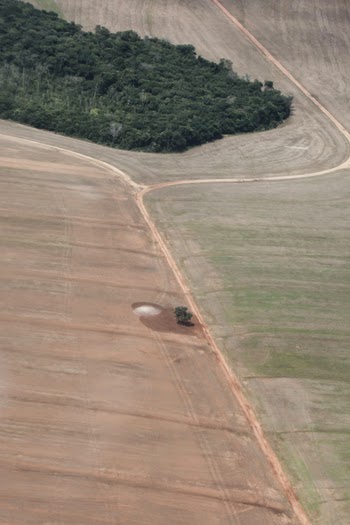
Soybeans grow near a forested area in the Brazilian state of Mato Grosso. Under the Soy Moratorium, major trading companies do not purchase soybeans produced in the Brazilian Amazon on recently deforested areas. Credit: Lisa Rausch
Today, fewer chicken nuggets can trace their roots to cleared Amazon rain forest.

In 2006, following a report from Greenpeace and under pressure from consumers, large companies like McDonald's and Wal-Mart decided to stop using soy grown on cleared forestland in the Brazilian Amazon. This put pressure on commodity traders, such as Cargill, who in turn agreed to no longer purchase soy from farmers who cleared rain forest to expand soy fields.

The private sector agreement, a type of supply chain governance, is called the Soy Moratorium and it was intended to address the deforestation caused by soy production in the Amazon. In a new study to evaluate the agreement, published today (Jan. 22, 2015) in Science, the University of Wisconsin-Madison's Holly Gibbs and colleagues across the U.S. and Brazil show that the moratorium helped to drastically reduce the amount of deforestation linked to soy production in the region and was much better at curbing it than governmental policy alone.
Holly Gibbs

"What we found is that before the moratorium, 30 percent of soy expansion occurred through deforestation, and after the moratorium, almost none did; only about 1 percent of the new soy expansion came at the expense of forest," says Gibbs, a professor of environmental studies and geography in the UW-Madison Nelson Institute's Center for Sustainability and the Global Environment (SAGE).

Between 2001 and 2006, prior to the moratorium, soybean fields in the Brazilian Amazon expanded by 1 million hectares, or nearly 4,000 square miles, contributing to record deforestation rates. By 2014, after eight years of the moratorium, almost no additional forest was cleared to grow new soy, even though soy production area had expanded another 1.3 million hectares. Farmers were planting on already cleared land.

The findings are intended to help policy makers and industry leaders make informed decisions going forward.

"We really wanted to understand if the Soy Moratorium mattered," says Gibbs. "There was a lot of discussion about ending the moratorium in 2014 and we wanted to know what the agreement meant on the ground and how it compared with governmental policy, which is the proposed replacement."

Brazil, Gibbs says, has some of the world's most stringent environmental legislation. Public policies, including increased enforcement of state and federal laws, have gone a long way to slow the destruction of rain forest. Yet, the study shows that "government policy alone is simply not enough," Gibbs says. At least, not yet.
Photo: Brazilian farmers examine their soybean crop Brazilian farmers examine their soybean crop. Credit: Lisa Rausch
Using 15 years (2000-2014) of satellite-based imagery covering the Brazilian Amazon forest and the Cerrado, another large tropical biome in Brazil comprising woodlands and scrublands, the researchers assessed how much land had been cleared to grow soy. They examined land use on thousands of individual farms and identified substantial large-scale deforestations not penalized by Brazilian authorities.

The team also mapped already-cleared areas suitable for soy production to assess the potential for future expansion under the Soy Moratorium and determined how much illegal deforestation was still occurring for purposes other than soy and in direct violation of Brazil Forest Code laws.

What the team found was surprising.

"Only 115 people out of several thousand soy farmers have violated the Soy Moratorium since 2006, but over 600 of them have violated the Forest Code," Gibbs says. "So, this same group of farmers is five times more likely to violate the governmental policy than they are to violate the private sector agreement."

For instance, the Forest Code dictates that 80 percent of Amazon rain forest on a person's property must be held in reserve; they can only clear 20 percent. Yet, just 2 percent of soy farmers have maintained their legal reserve and even farmers abiding by the moratorium were still illegally clearing forest on their properties, just not for growing soy.
A provision in the Forest Code also requires that property owners register their land, after which their name and a clear map of their property becomes publicly available. While the researchers say this is a huge step forward, the study found that property registration alone does not safeguard forests. For example, nearly a quarter of the illegal deforestation that occurred over the last year in the state of Mato Grosso, the Amazon's "soy capital," happened on these registered properties.
An island of forest in a sea of soy agriculture in Mato Grosso. Credit: Rhett Butler
Additionally, the researchers found that while soy-linked deforestation diminished in the Amazon biome, 20 percent of new soy areas created in the Cerrado over the study period directly led to deforestation. Expanding the moratorium to the Cerrado would reduce this conversion.

"It reinforces the idea that private sector interventions will be needed in the long term to maintain the deforestation-free production of soy," says Gibbs, who notes that soy is Brazil's most profitable crop and that most goes to feed animals produced for food. "Without the moratorium, chicken nuggets would once again contribute to rain forest destruction."

Implementing environmental laws across the Brazilian Amazon, an area more than six times the size of Texas, is a huge challenge, and Gibbs points out that enforcement has significantly ramped up in recent years. Despite this, the study found that government enforcement efforts capture only between 15 and 50 percent of illegal, large-scale deforestation. Even then, many factors make execution of fines and other penalties difficult.

Meanwhile, the study shows that a small number of soy traders, like Cargill, ADM and Bunge, have "a lot of power and control to influence land management decisions on the ground," says Gibbs.

The study also found there is enough already-cleared, suitable land in the Amazon to allow soy production area to expand by 600 percent. Presently, the area of land used to grow soy in the Amazon is comparable to the size of Vermont. Brazil rivals only the U.S. in terms of soy production and trade.

The team continues to use satellite data and field surveys to better understand deforestation dynamics and land use decisions in the Brazilian Amazon and Cerrado, the most active land use frontiers in the world. Gibbs and colleagues are also conducting econometric analysis to evaluate the interplay between deforestation and the Soy Moratorium, one of the first voluntary zero-deforestation agreements in the world.

Ensuring this reduced deforestation continues is a priority for those involved, and Gibbs says new approaches to the policy — that combine elements from public and private strategies — are being considered.

"We work closely with policymakers, the agricultural industry and nongovernmental organizations, and aim to use our rigorous scientific analysis to help inform decisions going forward," Gibbs says.

The study was funded by the Gordon and Betty Moore Foundation, the Norwegian Agency for Development Cooperation's Department for Civil Society, NASA and several Brazilian agencies. Co-authors include researchers from NASA; the University of Maryland, College Park; the National Wildlife Federation; Universidade Federal de Minas Gerais, Belo Horizonte; IMAZON Institute of People and the Environment; and Instituto Centro de Vida.

Material Source: UW
Source: Center for Sustainability and the Global Environment(SAGE).

Pilot plant for removal of extreme gas charges from deep waters

Written By Unknown on Tuesday, January 6, 2015 | 3:28 AM

Pit Lake Guadiana in the former mining area Herrerias in Andalusia, Spain.
Credit: : Bertram Boehrer/UFZ
Being part of the mining area Herrerias in Andalusia, deep waters of Pit Lake Guadiana show extremely high concentration of dissolved carbon dioxide (CO2). In the case of a spontaneous ebullition, human beings close-by would be jeopardized. To demonstrate the danger and the possible solution, scientists of the Spanish Institute of Geology and Mining, the University of the Basque Country (UPV/EHU, Bilbao) and the Helmholtz Centre for Environmental Research (UFZ) constructed a pilot plant for degassing. A fountain pulls deep water through a pipe to the surface, where the gas can escape from the water. The buoyancy produced by the bubbles provides the energy required for driving the flow.

"The deep water in the residual lake Guadiana contains an extremely high volume of carbon dioxide (CO2). Oxidation of ores has created a very acidic milieu, which is also known from other mining areas. In the mining area Herrerias however, this acidity dissolves carbonate from the rocks and produces carbonic acid (dissolved CO2), which can be accumulated under the high pressures of deep waters in the lake. There is not much circulation beyond 25 meter depth to remove the gas load" says Dr. Bertram Boehrer of UFZ, who is physicist and has been investigating stratification in lakes at many places on Earth. Due to the high hydrostatic pressure, each liter of deep water contains about 2.5 liters of CO2 gas. As long as the stratification remains stable, the gas is retained in the deep water. A land slide or other processes producing large water movements could facilitate a sudden release of gas previously confined under high pressure. Inhaled air of 8 percent CO2 are considered deadly for humans.

Now the scientists installed a degasing pipe which is the heart of the new pilot plant: Deep water enters a pipe at 61m depth. On the way up, hydrostatic pressure drops and gas bubbles form. The reduced density of the water-gas-mixture allows that deep water is pushed out of the pipe at the upper end to form a fountain above the water table, where gas is released to the atmosphere. This is an elegant solution, as the system does not require any additional driver, and the controlled release of CO2 does not pose any problem. "With this pilot plant, we could demonstrate that this approach also works in Guadiana pit lake. This can now be proposed to authorities as a possible approach to deal with the gas load." Though the lake in the mining area is fenced and access is not permitted to the public, this prohibition is difficult to survey.

Earlier installations in Lake Nyos in Cameroon served as a good example for this approach. In this lake, degassing pipes had been installed, which released the gas load with three fountains. On August 21st 1986, a large volume of gas escaped from the lake suddenly. The gas entered valleys of the surrounding area. 1700 human beings and thousands of animals were killed. The trigger could have been a land slide though this was never really proven. To avoid a repetition of this disaster, the gas load is slowly removed from the lake. One more crater lake called Monoun in Cameroon suffocated 37 human beings close to its shores in a similar eruption. Also in Monoun degasing fountains have been installed.

In Guadiana pit lake we do not see the same danger as in Lake Nyos, due to smaller size and depth. In addition, a density gradient between surface waters and deep waters is keeping the system stable. However, gas concentrations are so high that precaution must be taken. More detailed investigations must be implemented and remediation must be considered, says Dr. Boehrer. For the formation of such extreme gas loads, lakes must be sufficiently deep with incomplete winter recirculation (meromixis) and a strong carbon dioxide source. At the moment, we do not have such a lake in Germany.

Source: Helmholtz Centre for Environmental Research - UFZ

Targeted culling of deer controls disease with little effect on hunting

Written By Unknown on Sunday, December 28, 2014 | 6:47 PM

A new study found that the targeted culling of deer prevents the rampant spread of chronic wasting disease to healthy deer.
Chronic wasting disease, the deer-equivalent of mad cow disease, has crept across the U.S. landscape from west to east. It appeared first in captive mule deer in Colorado in the late 1960s. By 1981, it had escaped to the wild. It reached the Midwest by 2002. Little is known about its potential to infect humans.

The effort to keep chronic wasting disease in check in Illinois is a success, report researchers Nohra Mateus-Pinilla, left, a wildlife veterinary epidemiologist with the Illinois Natural History Survey; U. of I. animal sciences professor Jan Novakofski; and postdoctoral researcher Michelle Green.

Now researchers at the University of Illinois offer a first look at the long-term effectiveness of the practice of culling deer in areas affected by CWD to keep the disease in check. Their study appears in the journal Preventive Veterinary Medicine.

Each year, the Illinois Department of Natural Resources tests 7,000 (hunted, culled or incidentally killed) deer for CWD infection, conducts aerial surveillance to see where deer congregate and sends in sharpshooters to cull deer at the sites with disease, said Jan Novakofski, a professor of animal sciences at the University of Illinois and an author of the study.

"We know a lot about how far deer typically move," he said. "If they're sick, they're going to spread the disease that far. So if you find a deer that's sick, you draw that small circle and you shoot there."

Novakofski called this approach "a textbook scientific strategy for control. You reduce contact and you reduce the spread of infection with the smallest overall impact on healthy deer."

He and his colleagues at the Illinois Natural History Survey (part of the Prairie Research Institute at the U. of I.) found that the strategy worked: The prevalence of CWD in tested Illinois deer remained at about 1 percent from 2002 to 2012.

The team also found that hunters were killing more deer each year in each region of the state (north, central and south) regardless of CWD and CWD management. Statewide, the number of deer killed by hunters went from 147,830 in 2001, before the appearance of CWD, to 181,451 in 2012. The only exception: Two counties out of 10 with cases of CWD saw a reduction in hunter harvest over the same period.

"We wanted to know whether Illinois hunters have fewer deer to hunt now than they did before CWD," said Nohra Mateus-Pinilla, a wildlife veterinary epidemiologist at the INHS who led the study with postdoctoral researcher Mary Beth Manjerovic. "We found that hunter harvest has increased, and the prevalence of CWD has been maintained at low levels for 10 years in Illinois."

This finding answers a long-time complaint by some hunters that the culling of deer makes it harder for them to find deer to shoot, Novakofski said.
"Since 2001, hunter harvest of deer has increased similarly in the northern region of Illinois, where CWD occurs, and the rest of the state, where there is no disease or sharpshooting," he said.

In the two Illinois counties with fewer deer, "the reductions were 11 to 20 percent," Manjerovic said.

The team compared the Illinois experience with that of Wisconsin, which changed its CWD-management strategy from one that relied on culling to one that consisted primarily of allowing hunters to thin deer herds, the researchers said. Wisconsin saw a striking increase of infection in CWD-tested deer after it did that, the team found.

"In the early years in Wisconsin, (CWD prevalence) was still about 1 percent, just as it was in Illinois," Manjerovic said. "Then the strategy changed. Since 2007, CWD prevalence has increased to about 5 percent."

"We can't find an environmental or other variable that explains the increase in prevalence except a change in management," Novakofski said.

The numbers may not seem alarming to some, said postdoctoral researcher and co-author Michelle Green. But the trend is of concern, she said.

"CWD is a prion disease (like mad cow disease) and it's 100 percent fatal. 
There's no current way that we can actually make the deer better, so it's important that we keep it from spreading too far throughout the population," she said. "And then there's also the connection to mad cow disease. We don't have enough information yet to really understand what the impact to human health could be."

"We all hope that there is never a case of chronic wasting disease in humans. We all hope that it never spreads to people or agricultural animals," Novakofski said. "If it ever does, the investment in maintaining prevalence at a low level in Illinois will be repaid a thousand-fold."

Source: University of Illinois at Urbana-Champaign

Native fungus suggested as another tool for restoring ghostly whitebark pine forests

Written By Unknown on Friday, December 26, 2014 | 4:42 PM

Siberian slippery jack is a native fungus that may help in the effort to restore whitebark pine forests.
Credit: Cathy Cripps
Cathy Cripps doesn't seem to worry about the grizzly bears and black bears that watch her work, but she is concerned about the ghosts and skeletons she encounters.

The ghosts are whitebark pine forests that have been devastated by mountain pine beetles and white pine blister rust, said the Montana State University scientist who studies fungi that grow in extreme environments. The skeletons are dead trees that no longer shade snow or produce pine cones. The round purple pine cones hold the seeds that feed bears, red squirrels and Clark's nutcracker birds. Shade at the top of watersheds keeps snow from melting too fast in the spring, preventing trout streams from drying up too early in the summer.

Fortunately, she has found hope in a native fungus called Siberian slippery jack, or Suillus sibiricus, said Cripps, a mycologist in MSU's Department of Plant Sciences and Plant Pathology.

Cripps conducted a three-year study in collaboration with Waterton Lakes National Park in Canada that showed a 10 to 15 percent increase in the survival rate of whitebark pine seedlings when Siberian slippery jack spores are injected into the soil around them. The injection takes place in nurseries before the seedlings are transplanted in the mountains.

That increase is significant and good news for those trying to reinstate whitebark pine trees to the north-central Rocky Mountains and Pacific Northwest, Cripps said. The whitebark pine is a keystone species that grows at high elevations where other trees cannot, but it has been declared an endangered species in Canada and awaits the designation in the United States.

"That (jump in survival rates) might not sound like a big difference, but a small amount is a big deal considering the labor-intensive process," Cripps said.
Cyndi Smith, scientist emeritus at Waterton, said "The positive results have encouraged Waterton Lakes National Park to continue inoculating both whitebark and limber pine seedlings, to give them the best opportunity we can to establish and survive to maturity."

Participants in the research project, in addition to Cripps' and Smith's teams, were the U.S. Forest Service, National Park Service and volunteers from the United States and Canada.

Explaining how the collaboration began, Smith said, "Cathy gave a presentation on some of her Yellowstone work at the annual science meeting of the Whitebark Pine Ecosystem Foundation in Hailey, Idaho, in 2006. I was really taken with the idea that the ecosystem may have lost the beneficial fungi because our forests have been dead and dying for so long and that perhaps there was a way to reverse that trend so I approached Cathy with the idea.

"I'm a big believer in collaboration, whether locally or internationally, but certainly working with someone of Cathy's academic stature has been very helpful when I have applied for funding for whitebark and limber pine projects," Smith said, adding that, "Cathy's enthusiasm is very infectious, and it is a delight to work with her."

To carry out the research project, the participants placed cages around whitebark pine trees to collect pine cones without interference from wildlife. Then they tested the cones to see if they were resistant to white pine blister rust, removed seeds by hand from the resistant cones, grew the seeds into seedlings and shipped them to the nursery in Glacier National Park.
Cripps and former graduate student Erin Lonergan drove to Waterton Lakes 

National Park and throughout the Greater Yellowstone area, hiked to the tops of mountains and collected the Siberian slippery jack and other fungi from whitebark pine forests. Then they returned to MSU where they used a coffee grinder to process the spongy outer layer of the fungi. They added water to create a spore slurry, stored the mixture at MSU and later injected about 3 million spores into the soil around each seedling temporarily housed at the Glacier National Park nursery.

A few months later, volunteers planted more than 1,000 seedlings into MSU's test plots. Most of those test plots were located in Waterton, while others were in the neighboring Glacier National Park. The two parks together comprise Waterton-Glacier International Peace Park.

Two years into the study, Lonergan, Cripps and Smith reported success in the journal, American Forests. One year later, they announced their final results in the spring/summer 2014 issue of Nutcracker Notes, a small journal hosted by the Whitebark Pine Ecosystem Foundation.

"We wanted to get the word out that results after three years showed that inoculation with these native fungi significantly improved the survival of rust resistant seedlings, especially when inoculated seedlings were planted in burned areas near shelter objects such as stumps and logs," Cripps said.

High nitrogen fertilizations and fungicides prevent the inoculations from working, Cripps said. The age of the seedlings is important because they need to grow plenty of side roots before being inoculated.

When successful, the injected fungi slip like tiny socks over the ends of every root of the whitebark pine seedling and form a relationship that benefits both the tree and the fungi, Cripps said. The fungi help the seedling take in more nutrients and water from the soil. The tree produces the sugars that feed the fungi.

"Instead of being bad guys, these fungi are beneficial," Cripps said of the Siberian slippery jack. "They help plants take up nitrogen and phosphorus from the soil. That's a big deal."

Her study is one of many research projects involving whitebark pine forests, but it's unique because it focuses on beneficial native fungi, Cripps said. She added that land managers might want to incorporate MSU's findings into their overall strategy for restoring whitebark pine forests. She noted that large-scale inoculations are already planned for nurseries in Canada. She said inoculating beneficial fungi into nursery stock is common in Europe.

"As we work to save the vital whitebark pine from disappearing from the landscape, it is essential to use all available tools," Cripps said. "Ectomycorrhizal fungi are an integral part of forest integrity, ecology and health. Showing respect for these mighty microbes might just mean the difference between the restoration and death of a forest."

"Ectomycorrhizal fungi" refers to beneficial fungi that form a symbiotic relationship with the roots of trees. Siberian slippery jack is one of those fungi, and it only associates with five-needle pines. White pine blister rust is another type of fungus, one of the "bad guys."

Primates indispensable for regeneration of tropical forests

Written By Unknown on Wednesday, December 24, 2014 | 10:24 PM

Moustached tamarins (Saguinus mystax) contribute crucially to the seed dispersal of the neotropical tree Parkia panurensis. Credit: Julia Diegmann
Primatologist and plant geneticists have studied the dispersal of tree seeds by New World primates.

Primates can influence seed dispersal and spatial genetic kinship structure of plants that serve as their food source. This is the result of a cooperation project of behavioral ecologist Eckhard W. Heymann from the German Primate Center (DPZ) with plant geneticists Birgit Ziegenhagen and Ronald Bialozyt from the Philipps-University Marburg. This study was funded by the German Research Foundation.

At the DPZ-field station Estaciรณn Biolรณgica Quebrada Blanco in the Peruvian Amazonian lowlands, scientists studied how feeding, sleeping, and ranging habits of two species of New World monkeys affect the dispersal of the neotropical legume tree Parkia panurensis. For this, the researchers observed a group of Brown-mantled tamarins (Saguinus nigrifrons) and Moustached tamarins (Saguinus mystax), who jointly moved through home ranges in search of edible plants which included Parkia trees.

Fruits from these trees are pods that contain 16 to 23 seeds, each of which is surrounded by edible gum. The monkeys feed on the gum content of the pods and at the same time swallow the Parkia seeds which are later defecated intact in a different area.

During behavioral observations, researchers recorded the food intake of tamarins as well as the location of the Parkia trees that they visited. In addition, they collected faecal samples of the tamarins that contained seeds. "With the help of genetic analyses of the DNA found in the seed coat, which is of maternal origin, we could make an exact assignment of the corresponding "mother tree" for the seeds," says Eckhard W. Heymann from the DPZ. "This allowed us to determine how far Parkia seeds were dispersed by the monkeys."

In order to analyze the effect of seed dispersal by monkeys on a spatial genetic level, the scientists examined three different developmental stages of the trees. In addition to the seeds that contain the plant embryo, they collected leaves from young and mature Parkia trees in the home range of tamarins. "With the help of analysis from microsatellites, short repeated DNA sequences, we were able to identify genetic similarities of individual trees," says Heymann.

The analysis of the spatial genetic structure of the Parkia population revealed a significant genetic relationship of the plant embryos and young trees within a radius of 300 meters, which coincides with the distance within which most seeds are dispersed by the tamarins. For mature trees, the relationship was reduced to a radius of only up to 100 meters.

"In tropical rain forests, the seeds of 80 to 90 percent of trees and lianas are dispersed by animals. In addition to primates, birds and bats are the major animal groups that are responsible for seed dispersal," says behavioral ecologist Heymann. "For the plants, transport of their seeds is extremely important. As sedentary organisms, this is the only way that their offspring -- the embryos contained in the seeds -- can reach appropriate sites for germination and growth. Furthermore, this reduces the density-dependent mortality which occurs when the seeds fall under the mother plants," says Eckhard W. Heymann. Fruit-eating primates such as tamarins are therefore invaluable to the natural regeneration and diversity of ecosystems in which they live.

Source: German Primate Center

Lemurs: Gardeners of Madagascar rainforest at risk

Written By Unknown on Tuesday, December 23, 2014 | 7:28 PM

Onja Razafindratsima, a graduate student at Rice University, observes a lemur in a Madagascar rainforest. Razafindratsima led a three-year study to explore the relationship between lemurs and trees. Lemurs eat the fruit and spread its seeds far from the parent tree to help ensure its survival. Credit: Photo courtesy of Onja Razafindratsima/Rice University
A majority of Madagascar's 101 species of lemurs are threatened with extinction, and that could have serious consequences for the rainforests they call home. A new study by Rice University researchers shows the positive impacts lemurs can have on rainforest tree populations, which raises concerns about the potential impact their disappearance could have on the region's rich biodiversity.

A large proportion of trees in Madagascar's rainforest have fruits eaten by lemurs. Lemurs in turn disperse the seeds of their fruit trees throughout the forest with their scat. Such dispersal can play a crucial role for a tree species' ability to regenerate, but effects are poorly understood, especially when there are multiple dispersers.

For the tree, the evolutionary advantage of having animal-dispersed seeds may be that the seeds land well away from their parent trees where survival is low or that seeds are directed into spots where they are the most likely to sprout and survive.

Amy Dunham, an assistant professor of biosciences, and graduate student Onja Razafindratsima set out to detail the symbiotic relationship between fruit-eating lemurs and the trees that feed them through a three-year study in a rainforest in southeastern Madagascar.

Their data from observations, experiments and mathematical models demonstrate that seeds of a common canopy tree have a 300 percent higher chance of sprouting and becoming a sapling when dispersed by lemurs versus simply falling to the ground. One of the three lemur species is particularly good at dropping seeds in spots that are most advantageous for sprouting and survival. Other lemurs are not so selective, but still benefit the tree by moving seeds away from the parent tree. By acting as forest gardeners, these animals give the tree's population a boost.

The study appeared online in the Ecological Society of America journal Ecology.

As part of the study, the researchers followed the seed-dispersal patterns of three of Madagascar's lemur species: the red-fronted brown lemur, the red-bellied lemur and the southern black-and-white ruffed lemur. That meant tracking and observing groups of lemurs as the animals leaped from tree to tree through the forest, dined in the 65-foot-high canopies and dropped their undigested seeds at ground level.

Razafindratsima led the study as part of a thesis project she expects to complete early next year. She built a team of local researchers near Ranomafana National Park, the home of Centre ValBio, a research station founded by Dunham's former Ph.D. adviser, primatologist Patricia Wright.

"We have a team of up to 10 local villagers who are trained to do research," said Razafindratsima, a native of Madagascar. "Their exceptional knowledge of the forest is very important to us when we're trying to track lemurs and identify seeds and seedlings in a forest with over 300 species of trees."

The research team tracked 24 groups of lemurs over a year without the benefit of radio collars, said Razafindratsima, who keeps in touch with her team via phone and Skype when she's at Rice. She said the study sites were as close as a short hike from Centre ValBio and as far as a two-day trek through steep terrain that entailed camping overnight.

In addition to tracking lemurs and their dispersed seeds, the research team spent three years carrying out experiments on seed sprouting and survival. They found that dispersal by lemurs dramatically increased the odds that seeds would take root and survive. In particular, the red-fronted brown lemurs tended to drop seeds away from their parent trees and in places where there were gaps in the canopy. This gave individual seeds the best shot at taking root.

Dunham said trees benefit from the wide dispersal of their seeds, and for some species in Madagascar, lemurs are the primary or only animal that can distribute those seeds. As the largest fruit-eaters in the system, these lemurs swallow seeds that may be too large for other fruit-eating animals, such as birds or bats.

"Seeds away from the parent tree survive better because there's less competition among seedlings," Razafindratsima said. "If they're close by the parent, they may also share the same natural enemies, like soil pathogens and seed predators, so there's higher mortality."

Trees that lose their dispersers will simply drop their seeds to the ground beneath their canopies, where chances of survival are slim, Dunham said. "Lemurs fill an important role as the gardeners for these trees. By ensuring that some seeds land in spots suitable for germination and survival, they increase the ability of these trees to replace themselves"
Dunham hopes the study will contribute to growing efforts to protect lemurs, and therefore the rainforest, which has been impacted in recent years by economic and political instability.

She noted grassroots efforts within Madagascar led to the first World Lemur Festival in late October to celebrate and protect the animals and their habitats in Madagascar.

"What got us interested is that frugivorous lemur populations are declining across the island, and we know very little about how these seed dispersers actually affect tree populations," she said. "Once we understand that better, maybe we'll have a better idea of how the community might change if the lemurs disappear.

"If some species suddenly lose their dispersers, but others dispersed by birds or the wind are doing fine, it may change population trajectories and alter which tree species are dominant in a community. To understand what happens when these species are lost, we need to understand their role in the ecosystem," she said.

Live fast, die young: Soil microbes in a warmer world

Aerial view of the Northern Minnesota landscape including numerous conifer peatlands, deciduous uplands and lakes. Credit: USDA Forest Service Northern Research Station
Warmer temperatures shorten the lifespan of soil microbes and this may affect soil carbon storage, according to a new NSF-funded study published in Nature Climate Change this week.

A research team led by Shannon Hagerty and Paul Dijkstra from Northern Arizona University measured two key characteristics of soil microbes that determine their role in the soil carbon cycle: how efficiently they use carbon to grow and how long they live. "Higher temperatures make microbes grow faster, but they also die faster," said Hagerty, who conducted the research as part of her master's degree and was lead author on the study.

Soil microbes consume organic carbon compounds in soil, use some of it to make more microbes and release the rest to the atmosphere as carbon dioxide. The efficiency with which microbes use their food to make new microbes affects how much carbon remains in soil, and how much is released back to the atmosphere. The accepted idea before this study was that microbes would become less efficient at warmer temperatures.

The scientists incubated soil from a peatland and a forest in Minnesota at different temperatures and measured the efficiency with which microbes grew. They used a new method to measure microbial efficiency: they added small amounts of sugar and tracked how individual atoms in this sugar were turned into carbon dioxide.

"Microbes process sugars in similar ways as we do," says Paul Dijkstra. "We know very well how these processes work in laboratory studies, and can predict which carbon atoms in sugar molecules end up as carbon dioxide, and which are used to build new microbes. We applied this knowledge to the microbes living in soil."

The researchers found, contrary to expectation, that temperature had no effect on how microbes utilized their food, but instead boosted microbial death. "We don't yet know why microbes are dying faster at higher temperatures. Maybe they are eaten by nematodes or mites, or they die because of viruses," said Hagerty. "We need to know more about how temperature affects microbial death."

To explore what these new findings could mean for soil carbon storage in a warming world, the team compared output from a soil model that includes the effect of temperature on microbial lifespan to models unaffected by temperature change. "Models are used to predict how soil processes change, for example, in response to climate change," said Steve Allison, coauthor from the University of California, Irvine. "If we want to predict the future correctly, we'd better use models that accurately describe these microbial processes."

Including a temperature-dependent lifespan to the model increased the amount of carbon retained in soils at warmer temperatures compared to estimates from traditional models. The study concludes that incorporating this new insight into soil models will improve our understanding of how soils influence atmospheric carbon dioxide levels and global climate.

Does this mean that with climate change, more carbon will stay in the soil? "Too early to tell," said Bruce Hungate, Director of the Center for Ecosystem Science and Society at NAU. 

"The results suggest that the biochemistry of the microbes remains the same with warmer temperature, but that predation and death become more important. This laboratory study is just the first step, identifying a potential mechanism. Now we need to study how, in the real world, and in the long-term, the processes of biochemical efficiency and lifespan will change. And nobody has done that yet."

Source: Northern Arizona University

Kudzu can release soil carbon, accelerate global warming

This layer of decomposing knotweed will eventually form soil organic matter in invaded ecosystems.
 Credit: Image courtesy of Clemson University
Clemson University scientists are shedding new light on how invasion by exotic plant species affects the ability of soil to store greenhouse gases. The research could have far-reaching implications for how we manage agricultural land and native ecosystems.

In a paper published in the scientific journal New Phytologist, plant ecologist Nishanth Tharayil and graduate student Mioko Tamura show that invasive plants can accelerate the greenhouse effect by releasing carbon stored in soil into the atmosphere.
Since soil stores more carbon than both the atmosphere and terrestrial vegetation combined, the repercussions for how we manage agricultural land and ecosystems to facilitate the storage of carbon could be dramatic.

In their study, Tamura and Tharayil examined the impact of encroachment of Japanese knotweed and kudzu, two of North America's most widespread invasive plants, on the soil carbon storage in native ecosystems.

They found that kudzu invasion released carbon that was stored in native soils, while the carbon amassed in soils invaded by knotweed is more prone to oxidation and is subsequently lost to the atmosphere.

The key seems to be how plant litter chemistry regulates the soil biological activity that facilitates the buildup, composition and stability of carbon-trapping organic matter in soil.

"Our findings highlight the capacity of invasive plants to effect climate change by destabilizing the carbon pool in soil and shows that invasive plants can have profound influence on our understanding to manage land in a way that mitigates carbon emissions," Tharayil said.

Tharayil estimates that kudzu invasion results in the release of 4.8 metric tons of carbon annually, equal to the amount of carbon stored in 11.8 million acres of U.S. forest.
This is the same amount of carbon emitted annually by consuming 540 million gallons of gasoline or burning 5.1 billion pounds of coal.

"Climate change is causing massive range expansion of many exotic and invasive plant species. As the climate warms, kudzu will continue to invade northern ecosystems, and its impact on carbon emissions will grow," Tharayil said.

The findings provide particular insight into agricultural land-management strategies and suggest that it is the chemistry of plant biomass added to soil rather than the total amount of biomass that has the greatest influence on the ability of soil to harbor stable carbon.

"Our study indicates that incorporating legumes such as beans, peas, soybeans, peanuts and lentils that have a higher proportion of nitrogen in its biomass can accelerate the storage of carbon in soils," Tharayil said.

Thrarayil's lab is following up this research to gain a deeper understanding of soil carbon storage and invasion.

Tharayil leads a laboratory and research team at Clemson that studies how the chemical and biological interactions that take place in the plant-soil interface shape plant communities. He is also the director of Clemson's Multi-User Analytical Laboratory, which provides researchers with access to highly specialized laboratory instruments.

Source: Clemson University
 
Support : Creating Website | Johny Template | Mas Template
Copyright © 2011. The planet wall - All Rights Reserved
Template Created by Easy Blogging Published by Mas Template
Proudly powered by Blogger